House & Home — Field report TQL-HOM-021
Buying With a Tight Inspection Window? Five Checks That Decide Which Level You Need
General inspection, engineer's report, sewer scope, insurer's four-point: how to work out which one your house actually needs before the clock starts.
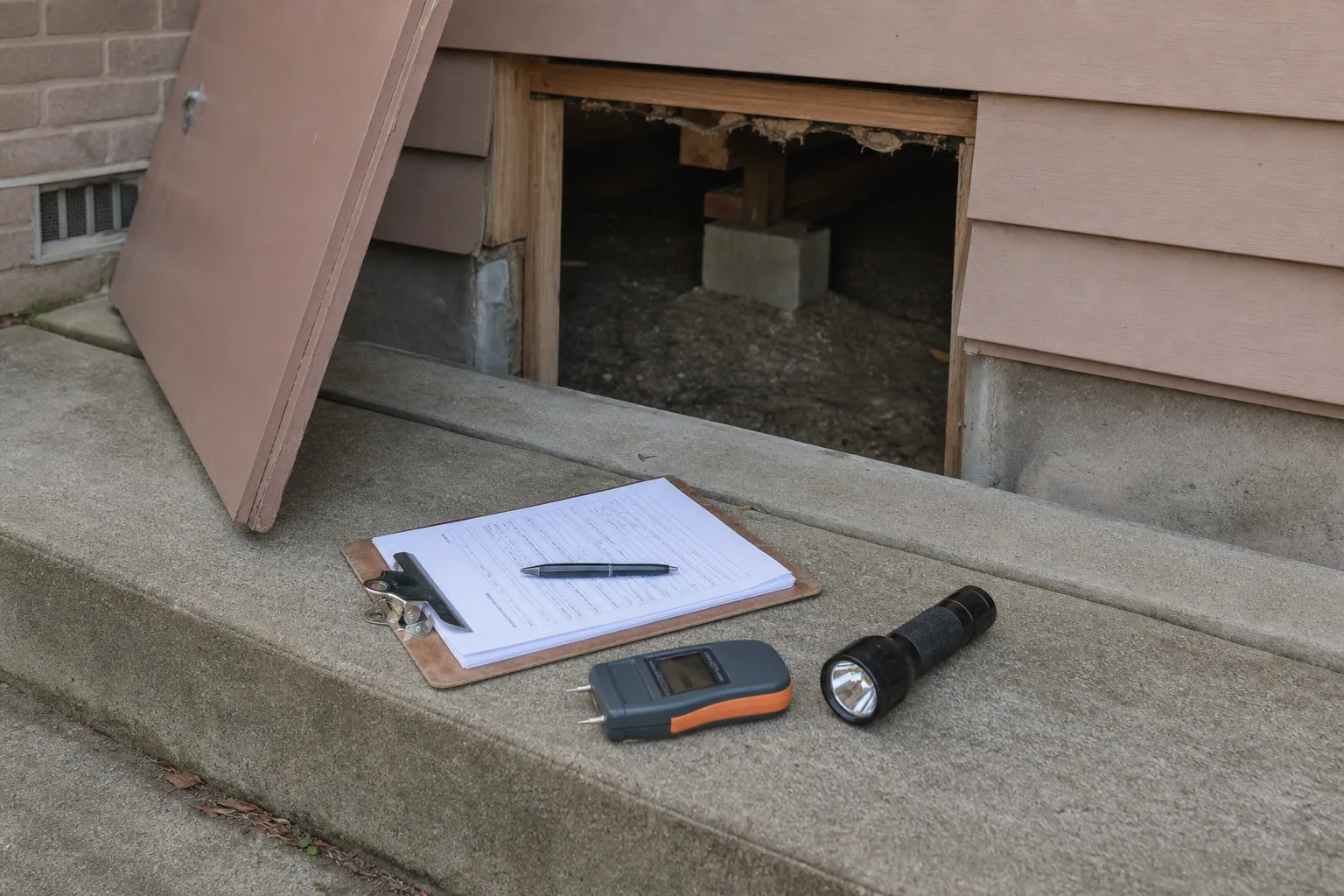
The inspection period is short and it starts the moment the contract is signed. Most buyers spend the first three days of it figuring out what they should have ordered. By the time they know, the good inspectors are booked and the sewer camera outfit can't come until Thursday. The decision you're actually making is not whether to get an inspection. It's which combination of inspections, in what order, and who is qualified to sign each one. That decision is easier to make in advance, sitting at a kitchen table with no deadline, than it is on day two of a ten-day window.
Here are five checks that tell you what level you need, and what has shifted underneath them in the last few years.
1. Read the standard of practice before you read a sample report
A general home inspection is defined by a written standard, and the two big ones in the United States come from the American Society of Home Inspectors and InterNACHI. Both describe a visual, non-invasive examination of readily accessible systems. That phrase carries the whole decision. The inspector will not move your seller's stored boxes, will not cut into drywall, will not lift nailed-down flooring, and will not walk a roof they judge unsafe. They report what the eye and a moisture meter can reach on the day.
Ask for a sample report by all means, but read the standard first. Once you know what is formally excluded, the sample report stops looking thin and starts looking like exactly what it claims to be. And the gaps in it become your shopping list for specialists. Buyers who skip this step tend to be angry at their inspector six months later for something the inspector was never engaged to do.
2. Find out what your insurer wants before you find out what you want
This is the piece that has changed most. Carriers in a lot of states have tightened underwriting sharply, and a policy that would have been bound on a phone call a few years ago now hinges on documentation about the roof, the electrical panel, the water heater and the plumbing supply lines. In coastal and older-housing markets, a four-point inspection is routinely requested. Roof age has become close to a pass-fail question at some carriers, and wind mitigation reports carry real premium consequences where they apply.
The practical move: call an agent for a quote before your inspection is scheduled, and ask what documentation the carrier will want. If the answer includes a four-point or a roof certification, you can often have it done in the same visit or the same week, rather than discovering after closing that your binder is conditional on a report nobody ordered. Roof age, panel brand and the presence of polybutylene or galvanized supply lines are the four things worth knowing before you write the offer at all.
3. Know the line between an inspector and a licensed engineer
General inspectors are trained to identify and describe. They are usually not licensed to determine cause, calculate load, or specify a repair. When a report says a foundation crack "warrants further evaluation by a qualified structural engineer," that is not a hedge. It's the boundary of the license.
You want an engineer, not a second inspector, when the issue is structural: stair-step cracking in masonry, a sagging ridge line, floors out of level by a visible amount, a removed wall with no visible header, or any prior repair with no paperwork. A stamped letter from a licensed professional engineer does two things a second opinion cannot. It tells you whether the movement is finished or ongoing, and it gives you a repair scope you can price. Some buyers get one engineer's letter and skip the general inspection entirely on a house they already understand. That's an unusual choice, but on a small, simple property with one obvious question, it can be the right one.
4. Add the specialist scopes that cameras and lab work made cheap
Three add-ons have gone from exotic to ordinary because the equipment got affordable: sewer lateral scoping, thermal imaging and drone roof photography. A sewer scope is the highest-value one on any house older than roughly the 1980s or any lot with mature trees near the line, because a collapsed or root-choked lateral is a five-figure problem the buyer inherits entirely. Thermal imaging finds moisture and missing insulation behind surfaces the standard of practice will not let anyone open.
Radon testing belongs in the same group and is jurisdiction-dependent in a way the others are not. The Environmental Protection Agency oversees radon guidance and the national program around residential testing and mitigation, and whether your area is a concern is a matter of local record rather than guesswork. Ask the inspector to run the test concurrently, since it needs closed-house conditions and days on site. Pest and wood-destroying organism inspections are a separate licensed discipline in most states, and in some loan programs they are required rather than optional.
5. Match the inspection to the moment, not just the house
There is more than one point at which an inspection is worth buying, and the market's return to routine contingencies after several years of waived ones has revived most of them.
- Pre-offer walk and talk. An hour with an inspector, verbal findings only, no written report. Useful when you're deciding whether to compete at all.
- Pre-listing. Sellers who get ahead of the report control the narrative and price the repairs themselves.
- Phase inspections on new construction. Pre-drywall is the one that matters. After that, the framing is a memory.
- Eleven-month warranty. On a builder's one-year warranty, an inspection at month eleven converts settling and punch-list items into someone else's expense.
Build the list before you're under contract. Call two inspectors and ask which specialists they routinely coordinate with, get the insurance conversation started early, and keep the roof age and panel type on a note in your phone. The inspection window is short by design, and the buyers who use it well are the ones who arrived already knowing what they were looking for.