House & Home — Field report TQL-HOM-786
Your Closing Slipped Three Weeks. Here Is What Those Weeks Actually Bill You For
A delayed closing rarely arrives as one big bill. It arrives as small weekly charges, a rate lock extension and a month of carrying two homes at once.
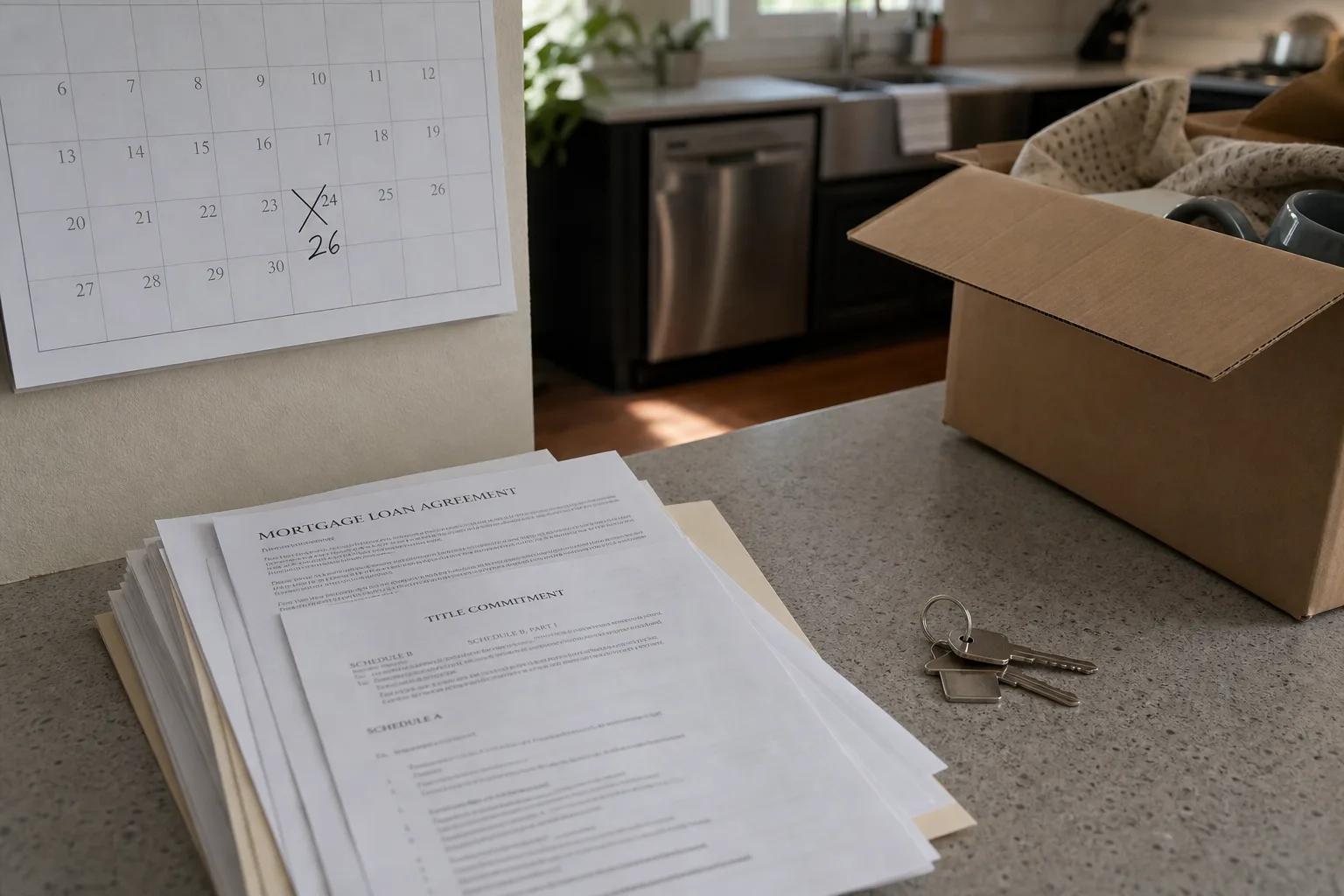
A delay in a home sale almost never announces itself. Nobody calls to say the deal has slipped three weeks. What happens instead is that a Tuesday passes without the appraisal being ordered, then a Thursday passes without the payoff letter arriving, and by the time anyone says the word "extension" out loud, you have already spent the money. That is the part worth understanding before you sign a contract with a date on it: the cost of waiting is not a lump sum you get to approve. It accrues quietly, in weekly increments, in four or five places at once.
The week-by-week meter, and what is actually on it
Break a delayed closing into weeks and the charges sort themselves into two piles. One pile is money you were going to spend anyway, just for longer. The other is money you would not have spent at all.
The first pile is the carry. Mortgage interest, property taxes and homeowners insurance on the house you are still holding. Utilities on a home you may have already half emptied. Lawn service or snow removal, because a vacant house with tall grass or an unshoveled walk invites both a code complaint and a break-in. If you have already moved out, add storage and possibly a short-term rental. If you have moved in with family, the cost is lower and the friction is higher, which is its own kind of price.
The second pile is the delay-specific pile, and it is the one people do not budget for. A rate lock extension, priced by the lender in fractions of a point against your loan amount, charged per stretch of days. A second appraisal if the first one expires. A re-inspection fee if the termite or septic certification has aged out. Per diem penalties written into the purchase contract, where a buyer who misses the closing date owes the seller a daily amount until it closes. Additional attorney or title company time if the file has to be reworked. Movers who charge to reschedule, and charge more to reschedule twice.
None of these items is large. That is exactly why they get waved through. Three weeks of carry on a house you no longer live in, plus a lock extension, plus a rescheduled move, is real money that never appeared in any estimate you were given.
What is actually driving the wait
Most delays trace back to a handful of causes, and almost all of them sit outside your control but inside your ability to ask about early.
- Title. An old lien nobody released, a deceased co-owner whose estate was never cleared, a boundary discrepancy from a survey. These take weeks because they require a third party to produce a document, and that third party has no deadline.
- Payoff figures. Your existing lender has to state exactly what it takes to release the mortgage, good through a specific date. If that letter arrives late or expires, the closing waits.
- Appraisal timing and value. In a busy market, the order alone can sit. If the number comes in under contract price, the deal stops while somebody decides who absorbs the gap.
- Condo or HOA documents. Lenders need a questionnaire and financials from the association. Associations answer on their own schedule, often through a management company that charges for the privilege.
- The other party's financing. This is the true chain in an American transaction. Your sale depends on a buyer whose purchase depends on their own sale, and you are exposed to a lender you will never speak to.
The Consumer Financial Protection Bureau oversees the mortgage disclosure rules that govern this stretch of the process, including the timing requirements around the closing disclosure a borrower receives before signing. Those rules exist so the final numbers are not a surprise, and they are the reason certain changes late in a file reset a clock rather than being absorbed silently.
The fixes that are worth paying for
Every tool for getting out of a chain is a way of converting an open-ended risk into a known price. Judge each one on that basis.
A rent-back lets you sell, collect your proceeds, and stay in the house as a tenant for a defined number of days. You pay rent, you stop carrying two homes, and you get a date. This is often the cheapest fix available and it is negotiated in the contract, not after.
A bridge loan or a HELOC on your current home lets you buy before you sell. You pay interest and fees for a short window in exchange for removing a contingency, which usually makes your offer stronger. Price the fees against what your offer is worth without the contingency.
Deliberate slack in the dates. Ask for a closing window rather than a single date, and agree in writing on who pays what if either side needs more time. A per diem you negotiated is far better than a per diem written by the other side's attorney.
Front-loading the slow items. Order the title search early. Request the payoff letter early. Ask the HOA for the questionnaire before you have a buyer. Deferral is the expensive habit here, and moving three tasks forward by two weeks each is often the entire difference.
Where this shows up three years later
The weeks themselves fade. What persists is what you did to end them. A family that extended a lock twice and paid two months of double carry usually financed that gap somewhere: a smaller down payment, a drained cash reserve, a credit card balance that took a year to clear. The roof inspection that came back "five to seven years left" goes unaddressed because the cushion that would have paid for it went into the delay. That is the real arithmetic. A three-week slip does not cost three weeks. It costs three weeks plus whatever maintenance got pushed to make room for it.
Which is why the useful move is to price the waiting before you need to. Ask your lender what an extension costs per fifteen days. Add up your own weekly carry and write the number down. Then when the Tuesday passes without the appraisal, you already know what the next month is worth, and you can decide what to spend to protect it.