House & Home — Field report TQL-HOM-518
Closing Date Slipping? Five Checks Before the Delay Starts Costing You Daily
When one linked sale runs late, the bill arrives in daily increments. Here is where the money actually goes, and what has changed about it recently.
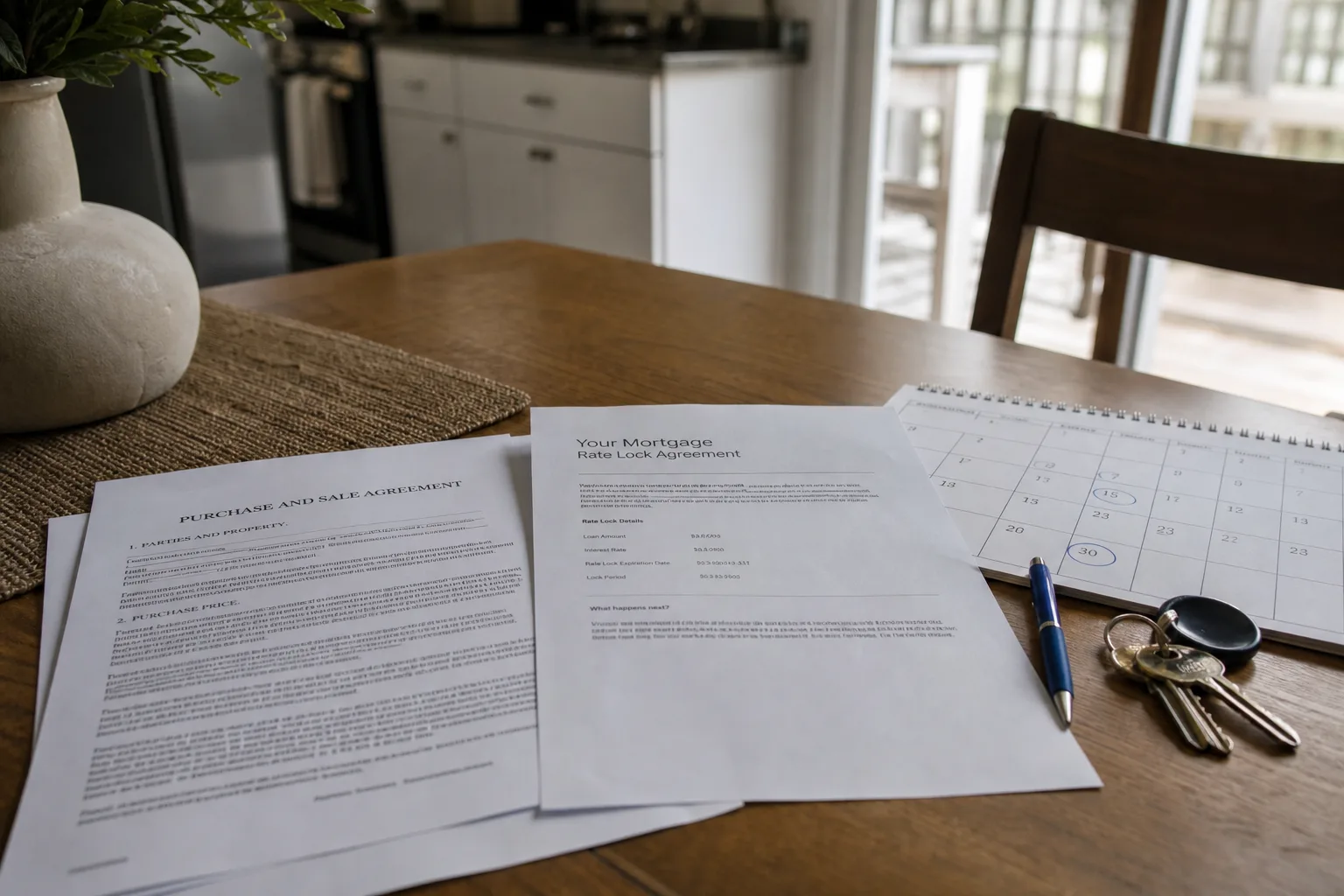
A delay used to be an inconvenience. Everybody shrugged, the title company moved the date, and the cost of the extra two weeks was a few annoyed phone calls. That is no longer how it works. Money has a price again, insurance has become a gating item rather than a formality, and the paperwork that governs a purchase has been rewritten in the last couple of years in ways that quietly shifted who absorbs a slipped date.
If your sale depends on someone else's sale, which depends on someone else's loan, you are in a chain whether or not anyone calls it that. Here is what to check, in roughly the order the money leaves.
1. The rate lock expiration, and the published price of extending it
Your lock has a date on it. Find it. Then ask your loan officer, in writing, what an extension costs: most lenders price extensions in fractions of a point per block of days, charged at closing, and the price is not the same at every lender or for every loan product.
What changed is the stakes. When money was cheap, blowing a lock and re-pricing cost you something you could round off. Now a lock that expires can drop you into whatever the market is doing that week, and the difference between the rate you locked and the rate you get shows up in every payment for as long as you hold the loan. That is the part worth sitting with. A two-week delay is not a two-week problem if it moves your rate. It is a thirty-year problem priced in monthly installments.
Two questions get you most of the way there. What is the extension fee per day or per week, and is there a cap on total extensions? And if rates have fallen since you locked, does the lender offer a float-down, under what conditions, and does an extension kill it?
2. Whose deadline actually binds, and where the kick-out clause sits
Every contract in a chain has dates in it. Inspection, financing, appraisal, title objection, closing. Only some of them carry consequences, and the ones that carry the sharpest consequences are frequently not in your contract. They are in the contract one or two links away.
If your buyer's purchase of your house is contingent on selling their own, read the kick-out provision in their sale. It usually gives their seller the right to keep marketing and to force a decision within a short window, often two or three days, if a better offer appears. That clause can collapse the chain in a weekend. On your side, check whether your purchase contract makes time of the essence, whether extensions are automatic or require the seller's written consent, and what happens to your earnest money if you cannot close on the stated day through no fault of your own.
Build a single calendar with every date from every linked contract you can get your hands on. Agents will sometimes resist sharing, but the binding date is knowable, and finding it late is how people end up paying to fix a problem they could have seen a month out.
3. The insurance binder, which is now a scheduling item
This is the change most buyers are unprepared for. Getting a homeowners policy bound used to be a phone call near the end of the process. In a growing number of markets, carriers now want a roof age, an inspection, sometimes a wind mitigation report or a four-point inspection before they will write a policy at all, and some will decline outright on an older roof. No binder, no funding. No funding, no closing.
Start insurance quotes the week you go under contract, not the week you close. If the house needs a repair before a carrier will bind, you want that discovered while there is still room to negotiate who pays for it rather than on day fifty with a lock expiring. Where a carrier is slow, the fix is usually parallel applications rather than waiting politely on one underwriter.
4. The carry cost per day, written as a number
Work out what one additional day costs you. Not approximately. The arithmetic is simple and almost nobody does it.
- Daily interest on any loan you are still carrying, plus the per diem interest your new lender will collect at closing.
- Property taxes and homeowners insurance on both properties if your dates overlap.
- Utilities, and whether your current policy restricts coverage once a house has been vacant for a set number of consecutive days. Many do. Thirty or sixty days is common, and the restriction is usually in the policy rather than announced.
- Temporary housing, storage, and a second move if the gap grows past a week.
- Rent under a post-closing occupancy agreement, which is typically set at the seller's daily carrying cost plus a deposit.
Once you have a daily number, every decision in the chain gets easier. Paying a lock extension of a few hundred dollars to avoid three weeks of double carry is obvious. So is declining to wait on a buyer whose financing keeps shifting.
5. What is refundable, what is a fee, and what is simply gone
Three years from now, the delay itself will be forgotten. The money will not. Sort every dollar at risk into three buckets: refundable deposits, fees you pay for an extension or a re-inspection, and sunk costs you will never see again regardless of outcome.
Appraisals, inspections, and the credit report are sunk the moment they are ordered. Earnest money is usually refundable only inside a live contingency, which is exactly what expires when dates slip. Lock extensions and re-inspection fees are real charges. And one procedural item surprises people: under the closing disclosure rules the Consumer Financial Protection Bureau is responsible for, certain late changes to your loan terms restart a mandatory waiting period before you can close. A change made to solve a problem can therefore create a short delay of its own, which is a good reason to raise loan changes early rather than in the final week.
The other recent shift is on the agency side. Buyer representation agreements are now signed up front, with compensation stated in writing before you tour a home. That makes the number visible earlier, which helps, and it means the terms of a delay are negotiated in daylight instead of at the closing table.
A chain is a series of other people's deadlines pointed at your bank account. The households that come through one cleanly are rarely luckier. They just priced the waiting before it started, and knew which lever to pull on the day it mattered.