Health — Field report TQL-HEA-682
First Time Appealing a Denied Medical Claim? Start With the Code, Not the Letter
Most refusals are generated by a rule, not a reviewer. Here is the order to work them, and why the first phone call usually isn't to your insurer.
The letter arrives and it sounds final. Words like determination and not covered and, near the bottom, a paragraph about your right to appeal that reads as though it were written to discourage you from using it. First-timers usually respond in one of two ways: they pay the balance to make it stop, or they write a long, sincere letter explaining their medical situation to a company that did not ask about it.
Both responses skip the part that decides the outcome. A refusal is almost never a paragraph. It's a code, sitting in a field on the explanation of benefits, and that code tells you which of five very different problems you actually have. Fixing a coding problem with a persuasive essay wastes the one thing you have a limited supply of, which is time on the clock.
1. Find out whether a human was involved at all
The common assumption is that someone reviewed your file, weighed it, and said no. Sometimes that happens, particularly with medical necessity denials on expensive procedures. Far more often, the claim hit an automated edit on the way in and never reached a reviewer. A missing modifier. A diagnosis code that doesn't pair with the procedure code under the payer's rules. A place-of-service field that says the care happened somewhere it didn't. A prior authorization that exists but wasn't attached to the claim.
You can usually tell which you're dealing with from the remark code. Denials that reference documentation, coding, eligibility, or duplicate submission are clerical. Denials that reference medical necessity, experimental treatment, or plan exclusions are substantive. The distinction matters because clerical denials are not appealed. They're corrected and resubmitted, and a resubmission is faster, cheaper, and far more likely to succeed than a formal appeal of the same facts.
2. Put the two documents side by side before you call anyone
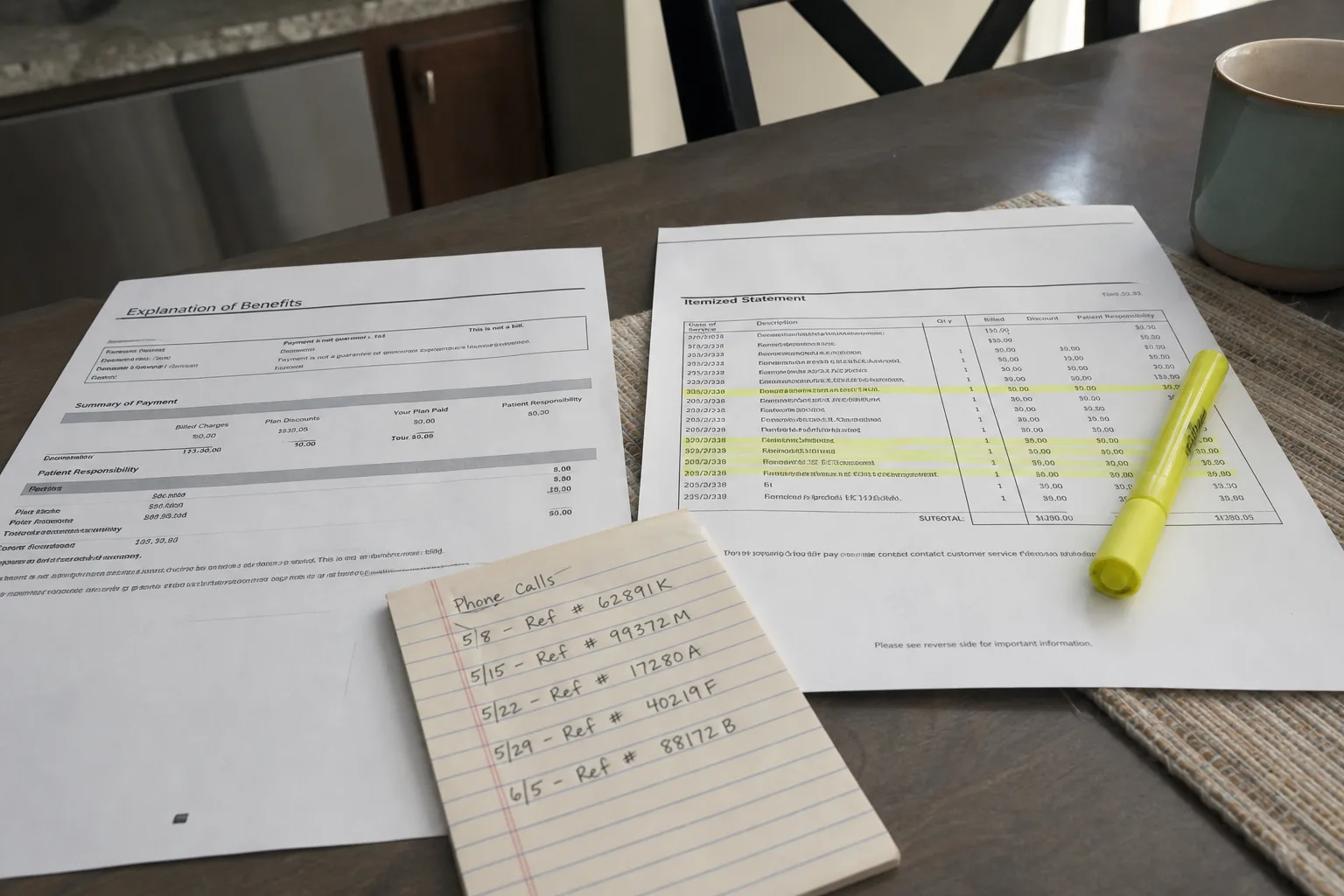
You need the explanation of benefits from the insurer and the itemized bill from the provider. Not the statement that says "balance due." The itemized one, with CPT codes, dates of service, and charges per line. Ask for it by name if you don't have it.
Read them against each other line by line. What you're looking for is disagreement: a date that doesn't match, a line the provider billed that the EOB doesn't list, a service the EOB shows as denied that you're being billed for at full charge rather than the contracted rate. First-timers are often surprised by how frequently the two documents simply describe different events. That gap is the whole case in a large share of refusals, and it takes twenty minutes with a highlighter to find.
3. Call the billing office first, not the insurer
This is the step that gets reversed most often and costs the most time. Your instinct is to call the company that said no. But if the denial is clerical, the insurer cannot fix it. Only the provider can submit a corrected claim, and the provider's billing office deals with these codes hundreds of times a week.
Say what you found. "The EOB shows denial code X on the March 4 line. Can you tell me whether this was billed with a modifier, and whether you'll submit a corrected claim?" That sentence signals that you've read the paperwork, which changes the conversation. Ask for a reference number and the name of the person you spoke with. Ask when the corrected claim will go out and when you should expect a new EOB. Then write both dates down, because nobody will call you when they pass.
4. Learn which clock you're actually on
There are at least three deadlines in play and the letter usually mentions only one. The plan's internal appeal window runs from the date of the denial notice, often measured in months, not weeks. The provider's timely filing limit with that insurer is separate and frequently shorter, and once it expires the provider may no longer be able to rebill at all. Then there's the external review window, which opens only after the internal process closes.
If you let a provider spend four months promising to resubmit, you can burn through your appeal window while waiting on someone else's clerical work. Run the two tracks at once. Let the billing office pursue the corrected claim while you file the internal appeal in writing before the deadline, noting that a corrected claim may moot it. A withdrawn appeal costs nothing. A missed one costs the whole balance.
5. Exhaust the internal appeal before you reach for external review
The order is not optional. Internal appeal goes to the plan itself, usually with a right to a second-level review. Only after that closes, or after the plan fails to respond within its own timeframes, does independent external review by a party outside the insurer become available. For employer-sponsored coverage, the Department of Labor oversees the appeal rights attached to these plans, and the notices you receive are required to tell you what those rights are and how long you have to use them. Read that section even though it's the dullest part of the letter.
Keep the appeal short and structural. State the claim number, the date of service, the denial code, why it's wrong, and what you want done. Attach the itemized bill, the EOB, and any authorization letter. Skip the narrative about how the illness affected your family. It's true and it doesn't move a file.
What deferral costs three years out
An unresolved denial doesn't sit still. It ages. The provider's internal cycle moves it to self-pay, then to a collections vendor, and at that point you're arguing with a third party that has no ability to correct a claim and no interest in the coding question. Meanwhile the timely filing limit has almost certainly passed, which means the legitimate fix is gone and only the negotiated write-off remains.
The households that come out of this clean aren't the ones who argued hardest. They're the ones who opened a folder the week the letter arrived, made two phone calls in the right order, and wrote down what they were told. Keep every EOB for a disputed episode of care until the account shows a zero balance in writing. That folder is worth more than any letter you could compose.