Legal Affairs — Field report TQL-LAW-286
The Consultation Is Free. What You Bring to It Decides the Next Three Years
In civil claims arising from assault, the first meeting rarely costs money. The preparation you skip before it shows up later as delay, weaker evidence, and a smaller recovery.
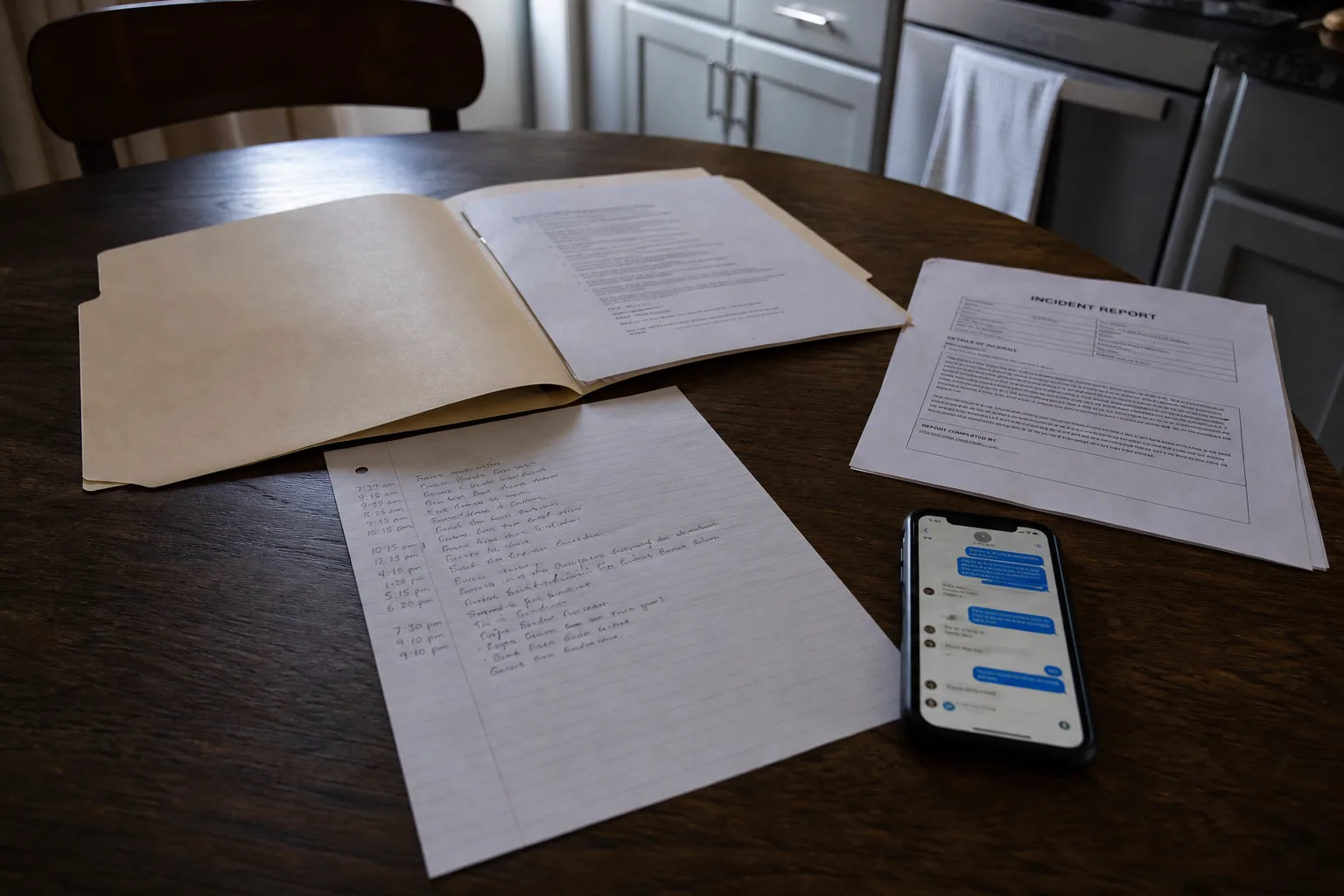
Most people arrive at a first legal meeting believing the meeting is the expensive part. It almost never is. In civil claims arising from sexual assault, the intake conversation is usually free, because the firm is evaluating whether to take the case on contingency, and evaluation is their cost of doing business. The expense lands elsewhere, and it lands later. It shows up as months added to a timeline, as a witness who has moved twice and changed jobs, as an insurance policy that has renewed under different terms, and as a share of a recovery that would have been larger had the file been built earlier and cleaner.
What follows is the pattern you notice after sitting through enough of these: the difference between a prepared client and an unprepared one is rarely visible in the first hour. It is visible at month fourteen.
What the first meeting actually costs, and who is paying for it
There are two fee structures in play, and they change what preparation is worth.
If the matter is a civil damages claim, most firms work on contingency: a percentage of any recovery, with costs (filing fees, records requests, deposition transcripts, experts) either advanced by the firm or deducted at the end. The consultation is free because the firm is deciding whether the case is viable, not billing you for the privilege. Your preparation does not lower a bill in that first hour. It lowers the total cost of the case, and since costs come out of the same pot the recovery comes from, it lands in your pocket.
If you are paying hourly, which happens in some employment matters, school disciplinary proceedings, or where you want independent counsel alongside a criminal case someone else is running, the arithmetic is blunter. An hour spent listening to you locate a date is an hour billed at full rate. Two hours of sorting at your kitchen table converts directly into money not spent.
Either way, the meaningful number is not the consultation fee. It is the total hours the file consumes before resolution, and how much of that is reconstruction work that could have been done once, at the start, by the person who already knows the answers.
The reconstruction problem is the whole cost driver
Nearly every hour of avoidable expense in this kind of case traces to one activity: rebuilding facts that existed and were not written down.
A firm can subpoena an employer's personnel file. That is a records request, a follow-up, sometimes a motion, and a wait. Or you can bring the three emails you already have. A firm can depose a supervisor to establish that a complaint was made in the spring. Or you can bring the message you sent your sister that week with a date stamp on it. The legal work is identical in kind. The cost is not close.
The other driver is sequence. Some steps cannot begin until an earlier one closes. If counsel cannot identify which entity is potentially responsible, they cannot identify the insurer. If they cannot identify the insurer, they cannot evaluate what a realistic recovery looks like, which means they cannot advise you on whether to pursue it. Every week spent establishing the org chart of a gym, a diocese, a hotel chain, or a staffing agency is a week the rest of the file sits still. Institutions restructure. Policies lapse. Franchise agreements change hands. Three years out, the question of who owned what in a given month can become genuinely hard to answer, and answering it costs real money.
Four things worth assembling before you walk in
Not a filing system. A folder and an hour.
1. A dated timeline, in your own words
One page. Dates or approximate dates, in order: what happened, when you first told anyone, who you told, what they did. Approximations are fine and are better than nothing, as long as you mark them as approximate. Never guess at a date and present it as certain. "Sometime in the second week of October, because it was the week before my nephew's birthday" is more useful to a lawyer than a confident wrong Tuesday.
2. Every institution that touched the situation
Employer, school, church, team, agency, landlord, venue, contractor, staffing company. Include the ones that seem peripheral. Institutional liability is often where the money is, and the connection between an entity and the harm is a legal question, not one you need to resolve yourself. A good sexual assault lawyer will spend part of the first hour testing exactly those relationships, and they can only test what you name.
3. Anything already in writing, in whatever form it exists
Text threads, emails, HR complaint forms, incident reports, medical or counseling records you already hold, police report numbers, screenshots. Do not edit, do not tidy, do not delete anything, including material you find embarrassing or that seems unhelpful. Bring it as it is. Selective production causes more problems than any single awkward message ever has.
4. What has already been reported, and to whom
A criminal report, a Title IX complaint, an internal HR finding, or an administrative charge changes the strategy and sometimes the deadlines. So does a settlement agreement or arbitration clause you signed at hire. Bring the paperwork if you have it, and say so plainly if you do not.
What deferral costs, measured three years out
The deadline is the obvious cost of waiting, and civil filing deadlines for these claims vary widely by state and by the age of the person at the time, with meaningful exceptions and revival windows in some places. It is not something to estimate from a search result. Confirming which deadline governs your facts is one of the specific things a first meeting resolves, often within twenty minutes.
The quieter costs are the ones worth naming. Witness memory degrades and witnesses relocate. Surveillance footage overwrites itself, often within weeks. Digital records fall off retention schedules. Corporate records get archived under a different entity name. Insurance coverage is frequently determined by which policy was in force on the date of the incident, and locating a policy from six years ago is a different job from locating one from last year. Separately, victim compensation programs, which states administer with funding overseen by the Department of Justice, generally carry their own application deadlines that run independently of any civil claim and can close well before it.
None of that argues for rushing a decision. It argues for having the conversation early and then deciding, rather than deciding by default while the record thins out.
What a prepared hour actually produces
You should leave a first meeting with four answers: whether you have a viable civil claim and against whom, what deadline governs it, what the fee arrangement is in writing, and what the next specific step is with a date attached. If the answer to the first question is no, that is still a return on the hour, and a well-prepared file gets you to a clean no faster than a vague one gets you to a maybe.
The folder does one more thing that is hard to price. It lets you spend the meeting talking about what you want out of this, rather than trying to remember what happened, in a room, in front of someone you just met. That is worth the hour at the kitchen table on its own.