House & Home — Field report TQL-HOM-841
Buying Your First House in San Antonio? The Survey Settles More Than the Fence Line
A land survey looks like a closing formality. It quietly decides your fence, your shed permit, your title coverage and how smoothly you sell years later.
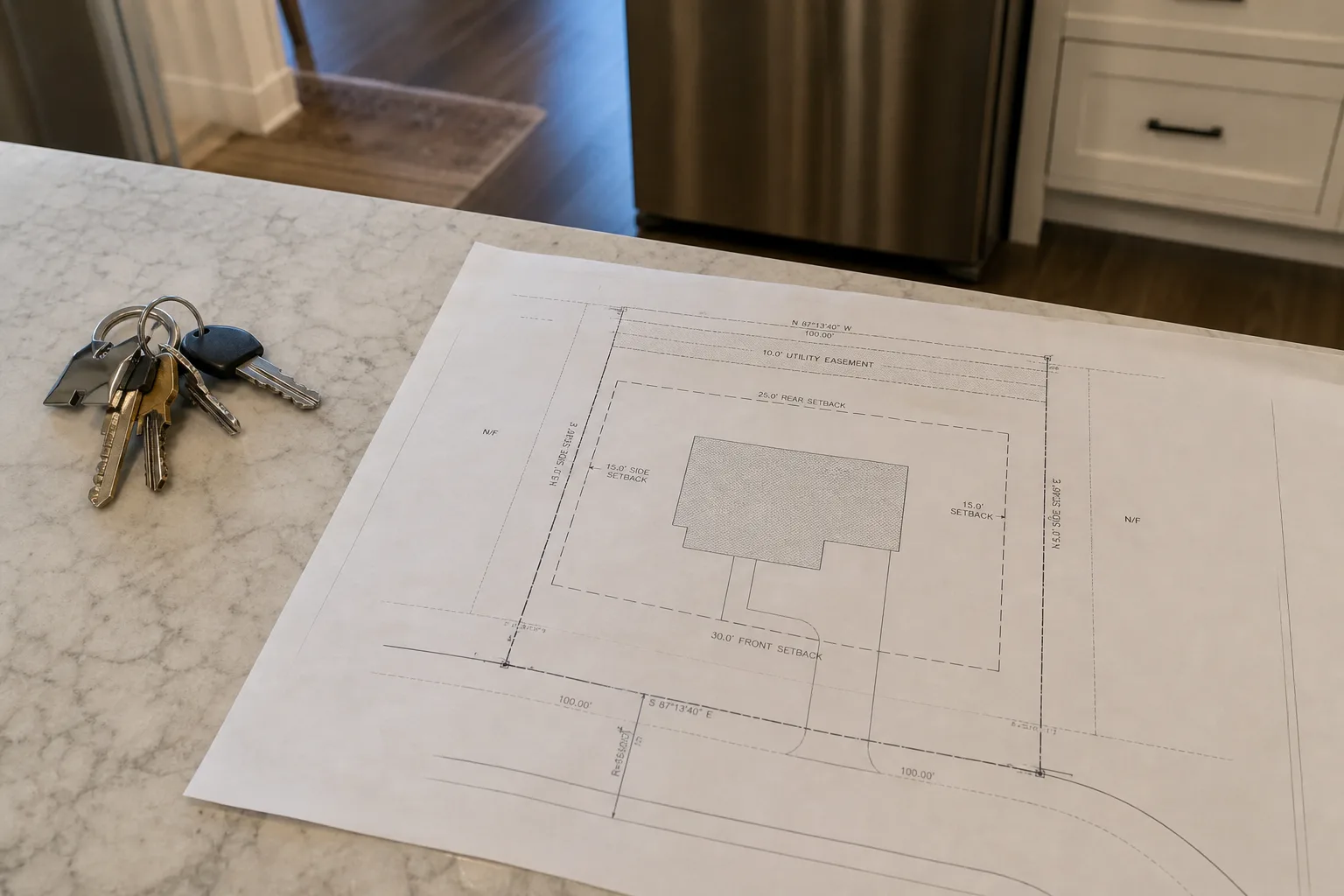
Somewhere in the stack of documents you sign, there is a line item for a survey. It costs a few hundred dollars, it arrives as a single sheet with a drawing of your lot on it, and nobody at the closing table spends more than thirty seconds on it. Then it goes in a drawer. Three years later you want a fence, or a pool, or a detached office in the back yard, and that sheet is the first thing somebody asks you for.
First-time buyers tend to treat the survey as a fee. It is actually a boundary of responsibility, and it keeps deciding things long after the deal closes.
Three documents that sound alike and do different jobs
Most people arrive at their first closing with inspection, appraisal and survey blurred into one general idea of "somebody checked the house." They check different things, for different people, with different consequences when they are wrong.
| Document | Answers | Who it protects |
|---|---|---|
| Inspection | What condition is the structure and its systems in? | You, before you commit |
| Appraisal | Does the price support the loan? | The lender |
| Survey | Where does the property legally stop, and what sits on it? | You, the lender, and the title company |
The inspection expires in usefulness the moment you replace the water heater. The appraisal is irrelevant the day after funding. The survey is the only one of the three that describes something that does not change on its own, which is why it keeps surfacing.
What is actually drawn on the page
A boundary survey shows the lot lines as recorded, the position of the house and any structures on the lot, the setback lines, and the easements running through the property. That last category is the one new buyers underestimate. An easement is somebody else's legal right to use part of your land: a utility corridor along the rear, a drainage easement across a corner, a shared driveway. You own the dirt. You do not get to build on it, and in some cases you do not get to plant a tree on it.
The survey also notes encroachments. The neighbor's shed clipping your line by eighteen inches. A driveway poured three feet into the lot next door by a previous owner. A fence built where it was convenient rather than where the pins are. None of this stops a sale. All of it becomes yours to deal with if nobody flags it before you sign.
Flood is the other thread. Elevation and flood zone questions start from survey data, and FEMA is responsible for the national flood mapping program that lenders and insurers reference when they decide whether you are required to carry flood coverage. A first-time buyer who gets a surprise insurance requirement two weeks before closing is usually a buyer whose survey raised a question nobody asked earlier.
New survey, or the seller's old one
In Texas this is a real fork, and it is usually presented to you as a minor cost question. It is not.
A seller can often hand over an existing survey along with a sworn affidavit, commonly the T-47, stating that nothing has changed on the property since that survey was made. If the title company and the lender accept it, you close without paying for a new one. That path is legitimate and it is used constantly.
Here is what it determines two steps later. Texas owner's title policies carry a standard exception for discrepancies in area and boundary lines. You can pay an additional premium, a modest fraction of the basic policy premium, to amend that exception so your title coverage actually reaches boundary problems. Getting that amendment generally requires a survey the title company is willing to rely on. If you accepted a fifteen-year-old survey to save a few hundred dollars, and a pool was added in year eight that the affidavit missed, you have accepted a document that does not describe your property and coverage that does not cover the gap.
The question is not "old or new." The question is whether the drawing matches what you can see standing in the yard. Walk the lot with the survey in your hand before you decide. A pool, a slab, an addition, a new fence or a carport that is not on the page is the whole answer.
The consequences nobody traces back
Fence replacement is the common one. You and the neighbor split the cost of a new fence, the crew sets it on the old post line, and the old post line was never the property line. Now there is a permanent structure sitting in a place that contradicts the record, and the person who eventually pays to move it is whoever is selling first.
Permits are the next. A detached structure, a workshop, an addition or an accessory dwelling unit all run into setbacks and easements, and the city wants to see the survey, not your description of the yard. Solar installers ask. Pool contractors ask. If your copy is stale, the first week of the project is spent ordering a new one.
Resale is the last. Buyers' title companies want a survey they can rely on, and a seller who can produce a current one with a clean affidavit removes a week of friction from the deal. Even if you ever sell outside the retail market, to one of the investor-side house buyers in san antonio who purchase as-is, the boundary document still has to satisfy a title company before anything funds.
What a first-time buyer should actually do
Read the survey during the option period, not at closing. Stand in the yard with it. Confirm that every structure on the ground appears on the page and nothing on the page is missing from the ground. Find the easements and ask what they prohibit. Ask your title officer directly what it would cost to amend the area and boundary exception, and whether the survey on the table supports it.
Then scan it, name the file with the address, and put the original somewhere you will find it. You will reach for it more times than you expect, and each time it will be the document that settles the question instead of starting an argument.