Money — Field report TQL-MON-141
The Shoebox and the Scanning App: Which Record System Survives an Examination
Most owners are running some combination of the old system and the new one without ever having decided to run either of them.
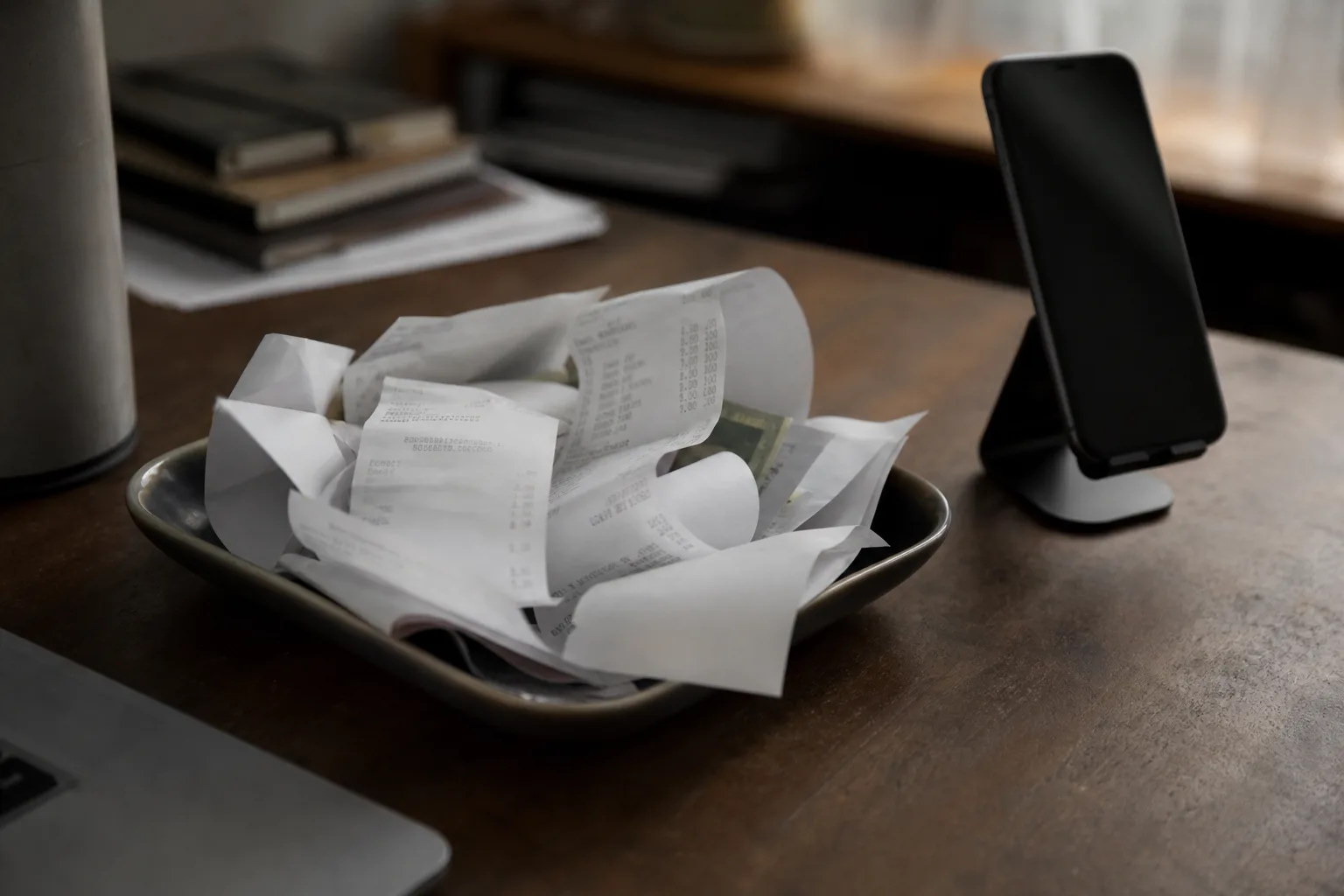
Ask a bookkeeper what separates a set of records that survives an examination from one that does not, and the answer is never about software. The way small businesses keep records has changed more in the past decade than in the fifty years before it, and most owners are running some combination of the old system and the new one without ever having decided to run either. Comparing them properly takes one test: does the system produce, without heroic effort, a record establishing the amount, the date, the vendor and the business purpose?
Paper, and Why It Used to Be Enough
For a long time the paper receipt simply was the record, because nothing else existed. You kept the slip, wrote on it if you were organized, and put it in a box, and the system worked as well as anybody needed it to. What changed is not that paper became unacceptable, since it remains perfectly valid, but that two practical problems overtook it while nobody was watching.
Thermal receipt paper fades, sometimes within a couple of years, so the record you carefully kept can be blank by the time somebody wants to see it. And sorting a year of loose slips into categories is a genuinely unpleasant multi hour job that almost everyone postpones until it gets done badly in a hurry. If you prefer paper, the fix is to photograph each slip as you receive it and treat the image as the record, after which the paper can go in the bin and the fading stops mattering to anybody.
The Bank and Card Feed
Accounting software connected directly to the accounts, importing transactions automatically, is where most small businesses now sit, and it improves on paper for three of the four elements, since amount, date and vendor all arrive accurately without anybody typing them. The missing element is business purpose, which no feed can supply, because a line carrying a supplier name and a figure establishes only that money moved and not whether it moved for the Harker job or for a bookshelf at home.
That note has to be added by a person, which is the whole weakness of the approach and the reason weekly categorizing exists as a habit. The second gap is that a feed captures nothing from the face of the receipt itself, which does not matter for most expenses and matters a great deal for meals with a business purpose and for anything where the itemization is the point. A feed is an excellent skeleton and it is not by itself a record.
The Receipt Scanning App
Photograph the receipt, the software reads it, and the image attaches itself to the matching transaction in the books, which closes both gaps in the feed approach at the cost of a subscription and a few seconds per receipt. What that produces is a complete record in one place: the transaction line, the image and a field for the purpose, searchable by vendor, amount or date. That searchability is what turns a request for support on one entry into a matter of seconds rather than an afternoon. The failure mode is familiar: the purpose field is optional, and a thousand attached images with no notes is a better archive than a shoebox and still not a complete record.
A Bookkeeper
The most expensive option and, past a certain size, frequently the cheapest overall once the owner's own hours are counted honestly. What a bookkeeper adds beyond data entry is reconciliation and a second set of eyes, since accounts get reconciled monthly, which catches duplicate charges, missed deposits and the small errors a self managed set of books accumulates quietly across a year. Reports then arrive on a schedule, so a drifting cost category surfaces in month three rather than at filing. They still need the business purpose from you for anything ambiguous, which usually arrives as a short monthly list of questions, and answering those promptly is the entire client side of the arrangement.
What Actually Satisfies an Examination
Whichever system you run, the standard behind it is identical: contemporaneous records, made at or near the time, establishing the four elements. Certain categories carry stricter substantiation requirements than the rest, and travel, meals and vehicle use are the three where the Internal Revenue Service expects considerably more than a bank line will ever carry on its own. That is not a trap laid for the careless. It reflects the fact that those three categories are the ones where the transaction alone genuinely cannot tell anybody whether the spending was business or personal, so the explanation has to come from somewhere else.
The word deciding most of it is contemporaneous. A mileage log kept at the time is a record, while the same figures reconstructed from a calendar in March are an estimate, and an estimate is what invites the follow up questions that turn a short review into a long one. Retention is the other half, since records supporting a return need keeping for years after filing and anything relating to property you still own needs keeping well past the disposal, which digital storage makes cheap enough that there is no reason to cut it close.
The Stack Most Businesses End Up With
Not one of the four but a combination: a bank feed for the transaction data, a scanning app for the receipts where detail matters, notes added weekly for business purpose, and a bookkeeper reconciling monthly once revenue justifies one. Start with whichever piece removes your current bottleneck. If deductions are being missed, start with receipt capture. If you do not know your numbers until year end, start with the feed and the weekly habit. If evenings are disappearing into it, start with the bookkeeper.
Two things genuinely improved over the past decade. Capture became nearly free, so there is no longer any reason to lose a record, and storage became durable, so a fire no longer takes the books along with the building, which used to be a real category of ruin for small businesses. What did not change is the standard, since the four elements were the requirement decades ago and remain the requirement now. Software made three of them automatic and left the fourth precisely where it was, which is why every system on this list still depends on somebody writing down why the money was spent, and why the best one is simply the one you will still be using in November.