Legal Affairs — Field report TQL-LAW-922
Fix It, Escalate It, or File It: Writing the Complaint Letter That Gets Acted On
Somebody at the receiving end makes one of three decisions in about ninety seconds, and most of what people instinctively write pushes toward the third.
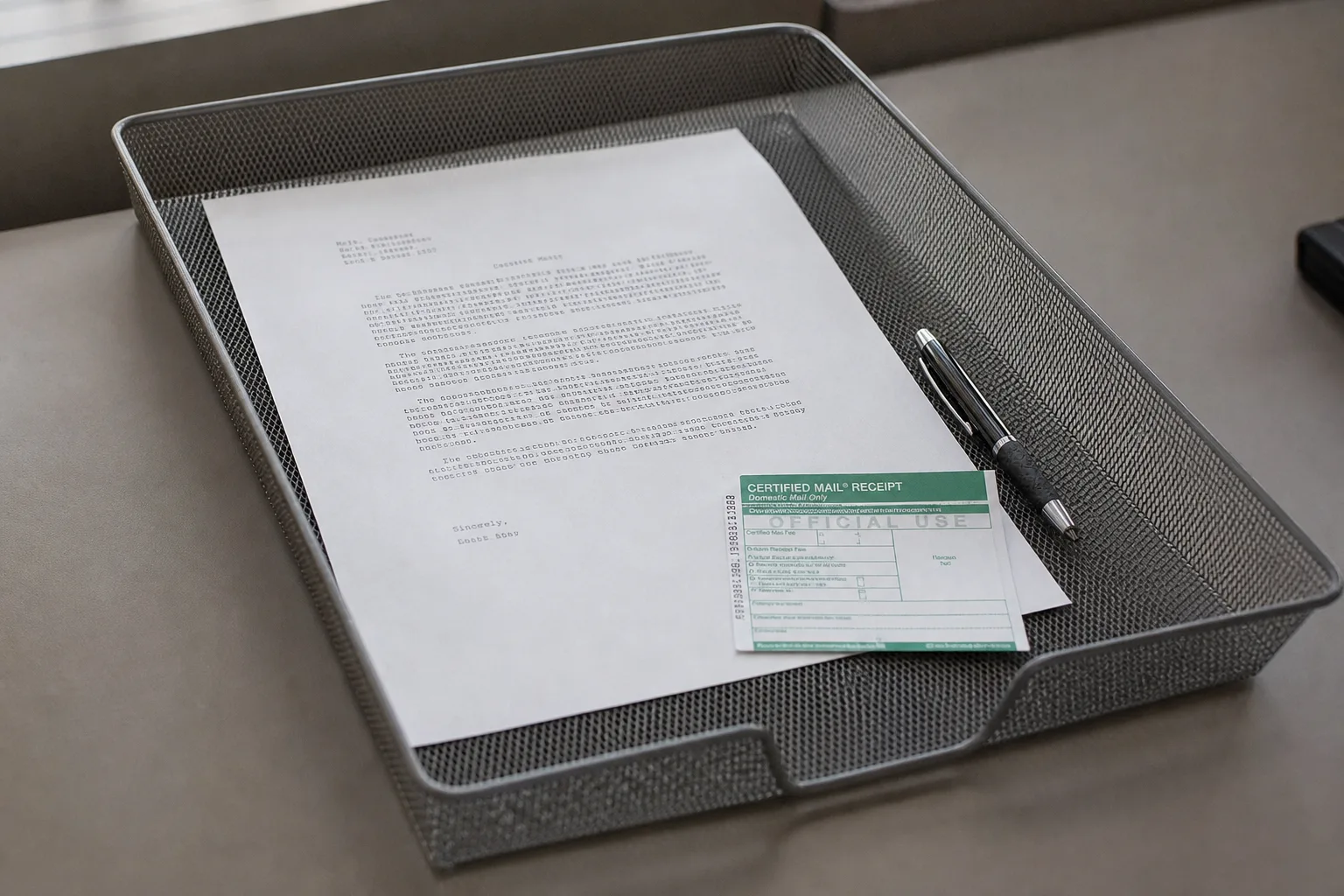
Picture the person at the other end opening it. Somebody in customer relations reads a complaint and makes one of three decisions in about ninety seconds: fix it, escalate it, or file it. Everything about how a letter is written decides which of the three it gets. Most of what people instinctively put in a complaint pushes it firmly toward the third, because the instinct is to convey how bad the experience was and the reader is not being asked to agree about that.
Who Actually Reads It
Not the person you are angry with. Usually an employee with a queue, a defined set of remedies they are authorized to grant, and a target for closing cases. They are not deciding whether you are right in some abstract sense, they are deciding whether granting your request is easier than not granting it and whether the file looks likely to come back if it is closed unresolved. Both of those are things a letter controls entirely, and neither of them is affected by how strongly the unfairness is described.
The Five Parts, in Order
Open with one sentence saying what you want, before any narrative at all: I am asking for a refund of the four hundred dollar installation charge on account 88214. The reader now knows which decision they are being asked to make, and everything following it becomes evidence for that decision rather than a story requiring interpretation. Then a dated chronology of six to ten lines, dates and events with no adjectives, which is the part carrying the weight because a reader can check it line by line against their own records.
Then the specific failure in a sentence or two, being what was agreed and what happened instead, quoting the contract or the confirmation email briefly if one exists. Then the request restated with a deadline attached, where fourteen days is standard and reasonable. Then one sentence about what you will do next, factual and without threat: if I have not had a response by the twenty second, I will file a complaint with the state licensing board and pursue the matter in small claims court. That last line is the one people either omit or overdo, and stated plainly it signals that the file will not close by being ignored.
Tone, Which Does More Work Than the Argument
Write it cooler than you feel, not because the feelings are unjustified but because temperature decides how the letter gets categorized within the first paragraph. Cut every adjective describing the other party or their conduct. Cut every sentence beginning with the word obviously. Cut anything about how this has made you feel, however true, since it does not help the reader grant the request. Cut capital letters used for emphasis. What remains is short and factual and reads as somebody organized, and that reading is worth more than any amount of emphasis.
Evidence, Attached and Referenced, and Where to Send It
Attach the four documents that matter rather than everything you hold: the contract, the proof of payment, the one written exchange where they said something inconsistent with what happened, and the photograph or estimate establishing the amount. Reference each of them in the chronology by name so the reader knows which attachment supports which line, because a letter with forty pages attached and no index is a letter that gets skimmed and then filed.
Send it to a named person if you have one and to the official complaints address if you do not, looking for a registered agent or corporate address rather than a store, since a letter to a branch frequently stops there. Send by email for speed and by certified mail with return receipt for proof, because the delivery receipt gives you a date and dates are what start the clocks on the remedies that come afterward. Copy anybody with genuine standing, such as a regulator you have actually filed with, and nobody else, since a long copy list of unrelated people reads as noise rather than as pressure.
Asking for Something They Can Actually Grant
The most common reason a perfectly reasonable complaint goes nowhere is that the request sits outside the reader's authority, so it has to be escalated, and escalation is where files go to wait. Ask for something concrete and proportionate, meaning a refund of a specific amount, a repair by a named date, a replacement or a credit, and understand that if what you actually want is an apology or an admission, those are rarely available and never quickly. Where the amount is large, consider asking in stages, with the specific fix first and compensation to follow, because a reader who can grant part of it today often will and a partly resolved file is much easier to move.
The Follow Up, and What to Do With the Reply
If the deadline passes, send one short message referencing the original letter by date, restating the request and confirming that the next step is now happening. Then do the next step, because doing what you said you would do is the entire mechanism. A licensing board complaint, a regulator filing or a small claims petition all generate a response that the letter did not, and each of them works better precisely because a dated letter, a delivery receipt and a chronology are already sitting in your folder.
Two kinds of reply come back and they need different handling. An offer close to what you asked for is usually worth taking even at a discount, because the alternative is weeks of correspondence over a difference smaller than the effort. Read whatever they ask you to sign before accepting. A settlement of one invoice is a different document from a release of all claims, and the second is sometimes offered where only the first was discussed. A refusal that engages with your chronology is more useful than it looks, because it tells you where they believe the weak point is, which is the thing you would otherwise be guessing at when you file. Check each factual assertion against your file and correct the wrong ones in a short reply, which then becomes part of the record too.