Health — Field report TQL-HEA-547
Keeping Your Own Records for the First Time? What Each One Buys You, and for How Long
Most household records exist to win one specific argument years later. Here's which ones to keep, what each is for, and when the clock on it finally runs out.
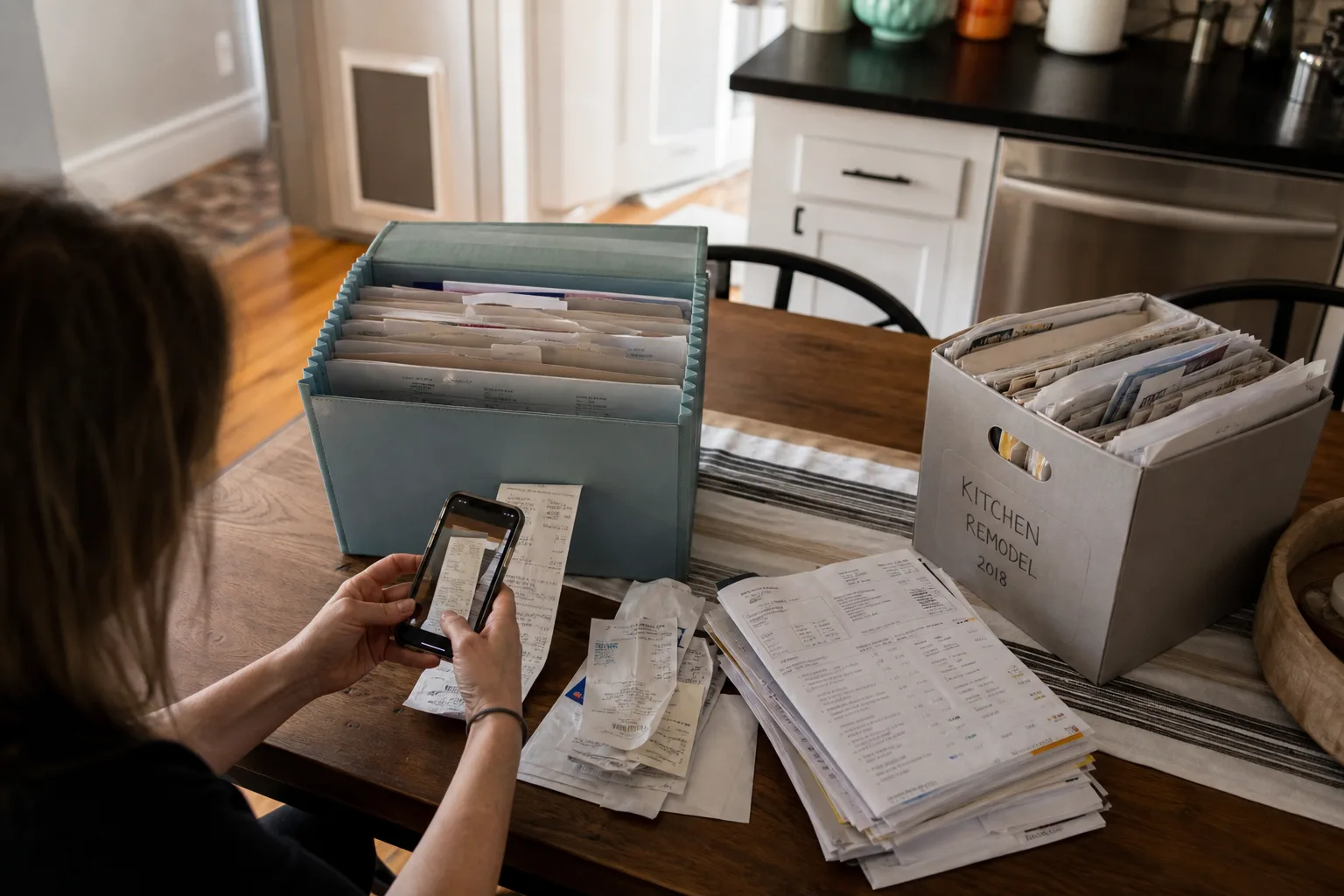
The first year you keep your own records, you will keep the wrong things. Almost everyone does. You'll save every utility bill, because it looks official, and you'll toss the receipt for the water heater, because the plumber already got paid and the thing works. Three years later the utility bills are worth nothing and the water heater has failed at year six of a ten-year warranty, and the manufacturer wants proof of the install date.
That's the shape of the problem. Records aren't a general virtue. Each one exists to win a specific argument on a specific future day, and if you can't name the argument, you're filing paper for no reason.
Every document is a bet on one future conversation
Start by asking what the piece of paper would be used for. A closing statement from a home purchase settles what you paid and what you paid for, which matters when you sell and have to establish your cost basis. A contractor's invoice for a new roof does the same job, plus a second one: it dates the roof for an insurance adjuster who wants to know its age before deciding how to value a claim. A pay stub proves income to a lender who won't take your word for it. A canceled check proves you paid someone who says you didn't.
Once you're thinking in arguments rather than categories, the discard pile gets obvious. A monthly electric bill argues nothing after the payment clears, unless you're deducting a home office or building a case about a meter. Keep the year-end summary if the utility offers one. Let the rest go.
The clocks are different, and mixing them up is where money leaks
Different records expire on different schedules, and the schedules aren't intuitive.
| Record | What it's for | Roughly how long it stays useful |
|---|---|---|
| Tax returns and supporting documents | Substantiating what you reported | Several years past the filing date; longer for property and investment records |
| Home improvement invoices | Cost basis when you sell; proof of age for claims | As long as you own the house, plus a few years after |
| Appliance and equipment receipts | Warranty claims, insurance replacement | Life of the item |
| Insurance policies and declarations pages | Proving coverage terms in force on a given date | Keep the version that was active during any year you might claim on |
| Loan documents and payoff letters | Proving a debt is satisfied | Well past payoff; payoff letters indefinitely |
| Bank and card statements | Disputes, reconciliation, backing up a deduction | Roughly a year, unless a statement supports a tax position |
The Internal Revenue Service sets the retention expectations for anything touching a return, and its guidance is the one you should read directly rather than take secondhand, because the periods vary with what you claimed. Everything else on that list is governed by contracts and statutes, not by tax rules, which is why a receipt can be useless for taxes and still be the most valuable page in the folder.
The consequences nobody traces back to the folder
Here's what actually happens when the records aren't there, and why people rarely connect the two events.
A dishwasher dies at four years on a five-year parts warranty. No receipt, and the manufacturer defaults to the date of manufacture stamped on the unit, which can be a year or more before you bought it. You pay for a part that was covered.
You sell a house you owned for eleven years. You remember spending real money on the kitchen, the deck, and the sewer line. Without invoices, none of it adjusts your basis. The gain on paper is larger than the gain in life.
A card charge is wrong and you notice on the next statement. Dispute rights under federal billing rules run on tight clocks measured from when the statement was mailed, not from when you noticed. If you're not reading statements monthly, you find the error after the window and you're negotiating from courtesy instead of from a right.
A security deposit comes back short. The landlord cites damage. You have no move-in photos, no dated condition report, and no copy of the lease addendum you signed on your phone. The argument is over before it starts.
None of these feel like filing failures at the time. They feel like bad luck.
Build the system around the moment the paper arrives
A first-time system fails when it requires a weekly session. Make it require ten seconds instead.
- One folder, physical or digital, per year, plus one permanent folder that never gets purged: deeds, titles, closing statements, payoff letters, warranties on things still installed.
- Photograph paper the moment it's handed to you. The photo is the record; the paper is a backup you can lose.
- Name files so the argument is in the filename: 2024-04 roof-replacement Meridian-Roofing 8-200.pdf. Future you is searching for a word, not browsing.
- When you buy something with a warranty, save the receipt with the manual, not with the receipts. You'll go looking for the manual.
- Once a year, at a fixed date you already remember, delete or shred the year that aged out. Retention with no disposal turns into a pile nobody searches.
The whole thing takes an hour to set up and a few seconds per document after that. The return shows up years later, in a claim that pays, a warranty that holds, and a sale where the number you spent counts for something.
Start with the permanent folder. If you build only that one and never build another, you'll still have caught the records that matter most and are hardest to replace.