Money — Field report TQL-MON-983
Five Months, Two Near Misses: A Kitchen Fire Claim That Was Never About Coverage
The fire was out in twenty minutes and the claim was paid in full. Twice it nearly was not, and neither near miss involved the fire.
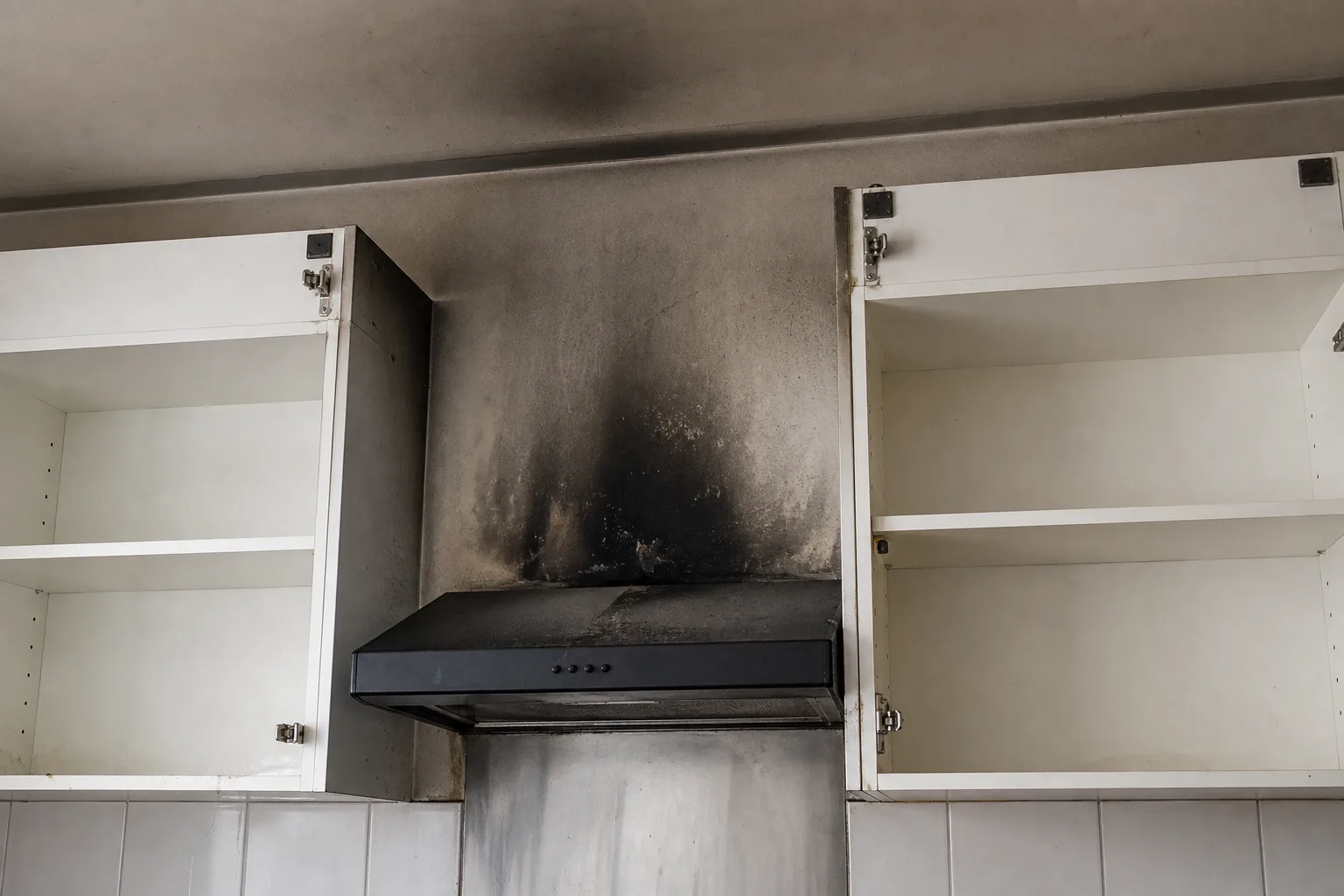
A pan fire in a single family house, put out by the fire department within about twenty minutes of the call, with structural damage confined to the kitchen and the wall behind it. The smoke reached the whole house and turned out to be the larger part of the loss by a wide margin. The claim was eventually paid in full, and twice across those five months it came close to being reduced or denied outright, with neither near miss having anything at all to do with whether a kitchen fire is a covered peril.
Week One, Which the Household Handled Well
The claim was reported the same evening, an adjuster was assigned within two days and inspected on day four, and the family moved first to a hotel and then to a short term rental with additional living expenses opened under the policy. The thing done well here, and the thing most often done badly, was that the homeowner photographed every room before anything was moved, including rooms showing no visible damage at all, because smoke travels everywhere and proving afterward where it went is genuinely difficult. Those photographs mattered a great deal in month three.
The thing missed was smaller and nearly fatal to the claim. Nobody asked what the policy required in the way of documentation, or when. That single omission produced the first near miss, and it is worth noting that it happened in a week when the household was doing almost everything else right, which is the ordinary way these gaps open rather than through carelessness.
Weeks Two to Four, and a Form in a Pile
The carrier sent a packet including a sworn proof of loss form, which arrived among a dozen other documents while the family was living out of suitcases in a rental, and it went into a pile with the rest. A proof of loss is a sworn statement of the amount being claimed, and most policies require it within a set period after the carrier asks for it, commonly sixty days. It is a condition of the policy rather than a formality, and a claim can be denied for failing to file one on time.
The household found this out on day forty seven, by accident, when the remediation contractor mentioned it in passing. What saved the claim was that a written request for an extension, made before the deadline rather than after it, was granted without argument. Carriers grant those routinely when asked in advance and are under no obligation to grant them once a deadline has passed, which is the whole distinction. The lesson is a sequencing one: on the day a claim opens, ask what documents are required and what the deadline is for each, get the answer in writing, and put every date in a calendar.
Weeks Four to Eight, and the Contents Inventory
This was the largest single piece of work in the entire claim and the part that determined the settlement more than anything else did. A smoke loss means a room by room list of everything affected, carrying description, age, condition, original cost and replacement cost, which for a family house runs to hundreds of lines. The household spent roughly thirty hours on it across three weeks, working from the photographs taken on the first night and from old purchase confirmations.
Two things made it go faster than it otherwise would have. Searching email for order confirmations recovered dates and prices for a large share of the electronics, furniture and appliances, and working room by room from photographs rather than from memory caught the items nobody would have thought of. One piece of coverage was nearly left behind: many policies pay actual cash value on contents initially and release the balance up to replacement cost once items are genuinely replaced and receipts submitted. A household that treats the first check as the final number leaves substantial money uncollected, so ask specifically about the holdback and what releases it.
Weeks Eight to Fourteen, and a Disagreement About Scope
The adjuster's scope covered the kitchen, the adjacent wall and cleaning of the two nearest rooms, while the remediation contractor's assessment covered the entire floor plan on the basis that smoke residue and odor had reached the ductwork and traveled. This was resolved technically rather than by argument. The contractor documented residue inside the return ducts and in rooms at the far end of the house, the homeowner's first night photographs corroborated the pattern, and the adjuster came back, looked into the ducts and issued a supplement covering whole house cleaning and duct remediation.
Weeks Fourteen to Twenty Two, and the Clause Nobody Had Read
The second near miss was the suit limitation clause. Most property policies require any legal action against the carrier to be brought within a period stated in the policy, that period can be shorter than the state's general limit for a contract claim, and the clock on it generally starts the day the damage occurred, not the day the carrier said no. By month four, with the supplement still unresolved, the household was moving toward the point where the clock would start to matter and nobody had noticed it existed.
An attorney consulted for a single hour identified it, and a written agreement with the carrier pausing the deadline while the supplement was worked out removed the risk entirely. That was one hour of legal time and the best money spent in the whole claim. Three changes would have prevented both near misses, and all three are calendar items rather than skills. Ask on day one for the list of required documents and their deadlines, in writing. Put the proof of loss date and the suit limitation date in a calendar with reminders a month ahead. And keep one running index of every document sent and received.
The claim closed in month five, paid in full, including the replacement cost holdback on contents that had actually been repurchased. Coverage was never in doubt at any point, which is the part worth sitting with. What nearly cost this family its recovery was a form sitting in a pile in a rented kitchen and a clause in a document nobody had read, and both were entirely fixable with a phone call made early enough that the answer still counted.