House & Home — Field report TQL-HOM-668
One Bedroom Window Fogs Every Morning. Which Trade Should Actually Take the Call?
A single north-facing bedroom window sweating at 7 a.m. pulls in four different trades, each selling a different fix. Here is how their answers differ three years out.
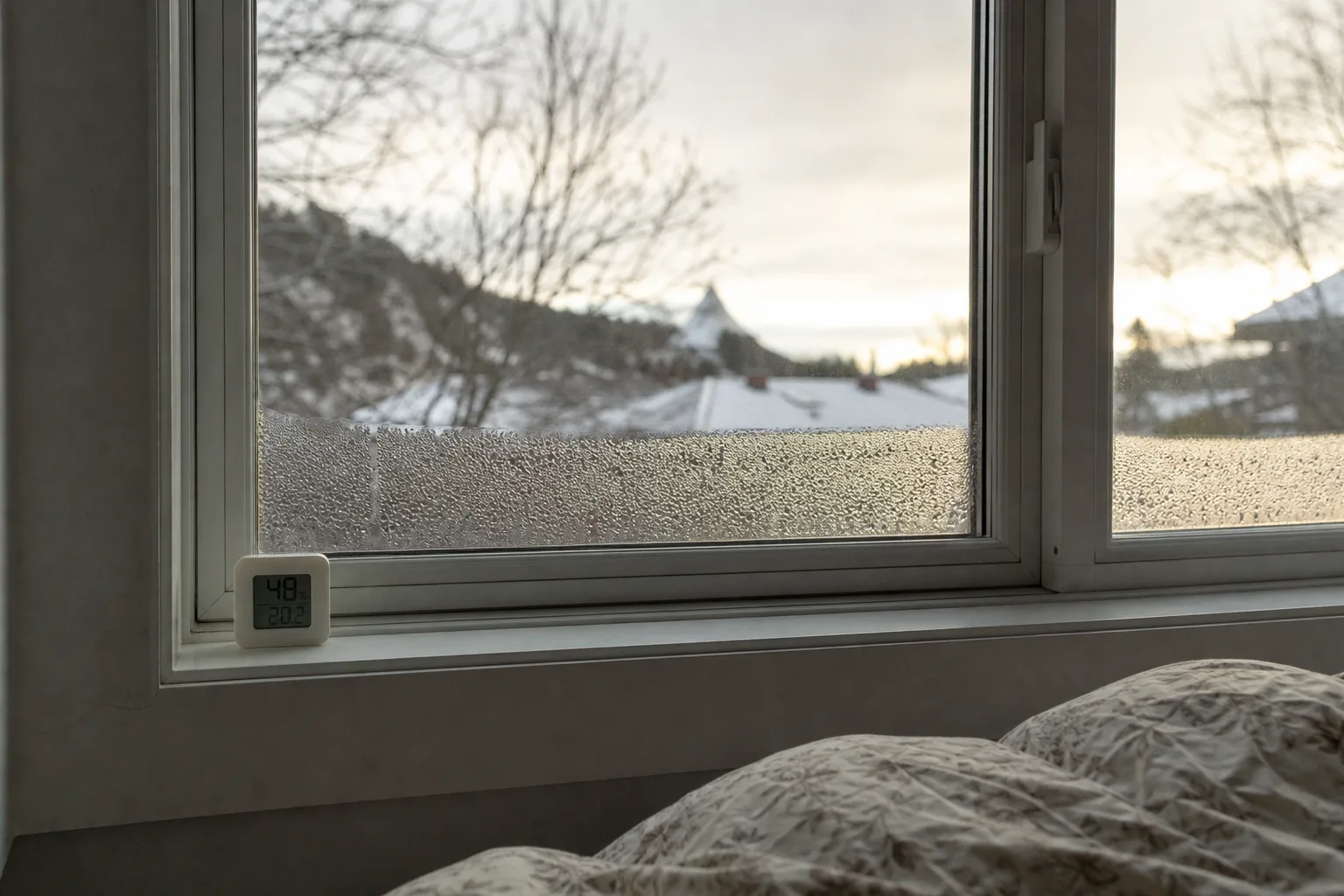
Here is the case, kept deliberately small. One house, one window: the north-facing bedroom, double-pane, maybe fifteen years old. From late November through February it carries a band of water along the bottom third of the interior glass every morning, heavy enough to bead and run. By noon it is gone. Every other window in the house is dry. The attic was air-sealed and topped up with insulation eighteen months ago, and the homeowner is fairly sure the problem started after that.
Call four different trades about that window and you will get four different diagnoses, four different quotes, and four different amounts of money spent over the next three years. None of them is lying to you. They are each looking at the part of the building they are licensed, equipped, and paid to look at. The trick is knowing whose part of the building this actually is before you let anyone start writing.
Three kinds of condensation, three separate bills
Before the phone calls, settle where the water is. This takes ten seconds and it eliminates most of the wrong answers.
Wipe the glass with your hand. If the water comes off, it is on the interior surface and it is a room problem: warm humid air touching a cold surface. The glass is reporting conditions, not failing. If the water is inside the glass, sealed between the panes and impossible to reach, the insulated glass unit has lost its seal and you are looking at a glass replacement. If the water is on the outside of the glass on a clear autumn morning, the window is performing well enough that the exterior pane is staying cooler than the dew point, which is the one version of this that requires nothing from anyone.
Our case is the first kind. That single detail moves the job away from the window company and toward the people who deal in air, heat, and moisture. The Department of Energy is the federal body that oversees residential energy performance and weatherization, and the framing that follows from that work is useful here: a window that sweats is a thermometer, and the number it is reading belongs to the room.
The four people who will answer the phone
Each of these trades is competent. Each sees a different problem.
| Who you call | What they measure | What they propose | What it actually fixes here |
|---|---|---|---|
| Window and glass contractor | Age, seal condition, frame, U-factor of the unit | Replacement sash or a full window | Nothing, unless the seal has failed. A warmer window moves the dew point but the humid air stays |
| HVAC contractor | Supply and return air at the room, static pressure, whether the bedroom is served at all | Balancing, a register adjustment, a return path, sometimes ventilation equipment | A great deal, if the room is starved of supply air and running colder than the thermostat thinks |
| Home energy auditor | Blower door result, indoor relative humidity, infrared scan of the wall and window perimeter | A written list of causes in priority order, usually no product | Identifies which of the other three is the right call, and in what order |
| Insulation or air sealing contractor | Attic and wall coverage, bypasses, thermal bridging near the header | Sealing, added insulation, sometimes exterior work | Relevant if the wall around that window is cold; also the likely source of the humidity rise |
Look at the fourth row again, because this is the piece that rarely gets said out loud. The attic work eighteen months ago did exactly what it was paid to do. It made the house tighter. A tighter house holds the moisture that four people, two showers, a dishwasher, and a gas range produce every day, where a leakier house was quietly flushing it out through the attic plane all winter. The bedroom window did not get worse. The house got better, and the window is now the coldest surface in a wetter building.
That is a solvable condition, and a cheap one. It is also an easy condition to mistake for window failure, which is the most expensive misreading available.
Sequencing the calls so you only pay once
The order matters more than the choice. A reasonable sequence for this exact case:
- Measure the room yourself first. An inexpensive hygrometer on the bedroom dresser for a week, read at 7 a.m., gives you a number that every trade will take seriously. A single bedroom running noticeably wetter than the rest of the house points at the room. Similar readings throughout the house point at whole-house humidity.
- Check the mechanical ventilation that was supposed to accompany the air sealing. Tighter envelope, deliberate ventilation. If a bath fan in the adjoining bathroom is undersized, unducted to the exterior, or simply never run, you have found the cause and the fix is a fan and a timer switch.
- Then the HVAC visit, if the room is cold. A bedroom with a closed door and no return path can sit several degrees below the rest of the floor overnight. That temperature gap is what turns ordinary humidity into water on glass.
- The energy auditor if the first three do not resolve it. A blower door and an infrared camera on a cold morning will end the argument. Audits are modest money and they are the one call in this list that does not end with someone selling you their own product.
- The glass contractor last, and by then you will know whether you are buying a window because it failed or because you want a warmer one.
What the wrong first call costs by year three
Replace the window first and the sweating usually improves, because a better unit runs warmer at the glass edge. The moisture, though, is still in the house. It goes to the next coldest surface: the closet on the exterior wall, the corner behind the dresser, the underside of the roof deck above the newly insulated attic floor. Three winters later the homeowner has paid for a window and is now paying someone to open a wall.
Run the cheap diagnostics first and the arithmetic changes shape. A hygrometer, a properly ducted bath fan, a service call to open up the airflow to one bedroom: that is a fraction of a single window, and it addresses the condition rather than the symptom. If the window still needs replacing after that, it gets replaced on a schedule you choose, at the price you negotiated, in a house that is no longer manufacturing the problem.
The other durable return is documentation. A dated humidity log and an auditor's report are what let you go back to the contractor who did the attic work and ask the fair question about ventilation. That conversation goes well when you have numbers and poorly when you have an impression.
The window told you something accurate on a January morning, and it told you early, while the fix was still a fan and a register. Read it as a measurement rather than a defect and you will generally find the right trade on the second call instead of the fourth.