Corporate — Field report TQL-BUS-593
Eighteen Pallets and No Dock? The Six People Who Set Your Fulfillment Bill
A single-SKU brand compares a 3PL, a self-storage unit and a marketplace program, and finds the real cost sitting with the receiving clerk, the property manager and the driver at the curb.
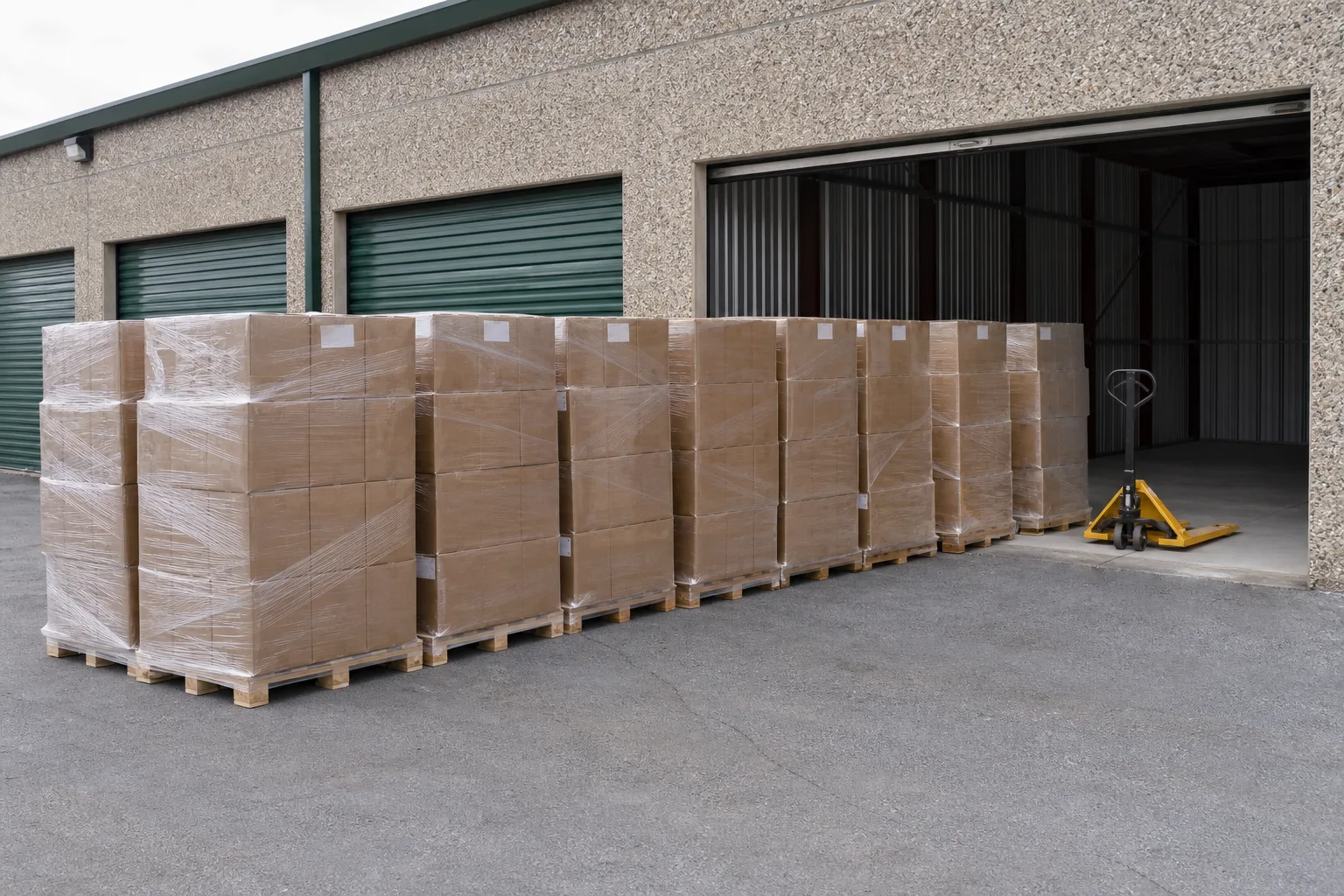
Take one real shape of problem. A brand sells a single product, a heavy one, boxed at roughly ten pounds. An overseas production run lands as eighteen pallets. Day to day the business ships around forty orders, almost all of them single-unit, and in the six weeks before the holidays that number goes up by a factor of five or six. The founder has a garage, a credit card, and three quotes in front of her: a third-party logistics provider forty minutes away, a climate-controlled self-storage unit with drive-up access, and a marketplace fulfillment program that would take the inventory in and ship it under its own label.
The quotes are not comparable. They are not even close to comparable, because each one is a price for a different set of people doing a different set of jobs. The spreadsheet comparison that most founders build compares the three line items they were quoted and ignores the six people whose ordinary working decisions determine what the arrangement actually costs by year three. Those people are worth naming.
The receiving clerk decides when your money starts working
At a 3PL, the person you talk to during the sales process is not the person who controls your outcome. You will meet an account manager, who is pleasant, responsive, and structurally unable to make the warehouse floor move faster. The person who matters is the inbound receiving clerk and the supervisor above them.
Here is why. A container of eighteen pallets arrives at a shared facility that is also receiving freight for forty other clients that week. Your contract will specify a receiving fee, usually priced per pallet or per labor hour, and it may or may not specify a turnaround commitment. If it does not, your pallets sit on the dock until the clerk works down to them. Nothing you own is sellable during that window. You are paying ocean freight carrying costs, you may be paying demurrage on the container, and your product is not available to fill orders.
Ask, before signing, two questions that account managers rarely volunteer. What is your standard receiving turnaround in units of business days, and what is it during October and November? And is that turnaround written into the agreement with a remedy attached, or is it a description of normal practice? The gap between those two answers is the single largest hidden variable in a 3PL relationship, and it costs the most at exactly the moment you can least afford it.
The second 3PL person to find is the operations lead for your pick zone. Ask who it is. A provider that cannot tell you is a provider where your SKU has no owner, and a single-SKU, heavy, high-velocity product in a facility built around light apparel picks is the kind of account that quietly generates mispicks and damage claims.
The property manager and the insurance agent, on the self-storage path
The self-storage unit looks cheapest on the quote because it is priced as real estate and the 3PL is priced as labor. The storage company sells you square feet. Everything that happens inside those square feet is yours.
Two people determine whether this works. The first is the property manager at that specific facility, and the person above them at the district level. A storage lease is typically written for personal goods, and most contain language about business use, about running a commercial operation on site, and about carrier access. Some facilities are completely comfortable with a tenant who picks and packs in the unit and has a carrier stop daily. Others are not, and the policy you are told verbally by a manager on a Tuesday is not the policy the district manager enforces in November when your pallet jack is blocking the drive aisle.
Get the answer in writing, by email, from the person who has authority over the site. Ask specifically about daily carrier pickup, about pallet deliveries by tractor-trailer, about whether an employee other than the leaseholder may access the unit, and about hours. Facilities with gate hours that close at seven will shape your shipping cutoff whether or not you intended that.
The second person is your insurance agent, and this one is not optional. A self-storage lease almost always disclaims responsibility for the contents, and the small protection plan sold at the counter is built for household goods, not for a commercial inventory position in the tens of thousands of dollars. What you need is a policy that covers stock away from your business premises, and the agent needs to know the value, the location, and that goods are moving in and out continuously. Underwriters price continuously turning commercial inventory differently from stored furniture. Get that quote before you compare monthly rents, because it belongs in the comparison.
There is a third person here if you hire help. Once you have someone else lifting ten-pound cases off a pallet in a space you control, you are an employer in a workplace, with a workers' compensation obligation and a safety obligation. The Occupational Safety and Health Administration is responsible for workplace safety standards, including in storage and material handling settings, and the fact that your space has a roll-up door instead of a loading dock does not change the category you are in.
The driver at the curb is a cost line
Freight people think about this constantly and e-commerce founders almost never do. The inbound leg to a self-storage unit is not the same move as the inbound leg to a 3PL.
A 3PL has a dock, a forklift, and a scheduling system. A trailer backs in, the pallets come off in twenty minutes, nobody pays extra. A self-storage facility typically has none of that. Delivering eighteen pallets there means a liftgate, which is billed. It frequently means a limited-access or non-commercial delivery surcharge, which is billed. It may mean the carrier cannot get a 53-foot trailer around the drive aisles at all, which means a transfer to a smaller truck at the terminal, which is billed. And it means you, personally, moving eighteen pallets from the curb into the unit with a rented pallet jack over a surface that was not designed for one.
Price that move with an actual freight quote to the actual address before you decide. Then do it again for the outbound side. Daily carrier pickup at a residential-coded or limited-access address can carry its own fee structure, and your zone math changes with the facility's location in a way that compounds across every order for the next three years.
The marketplace program, and the person you cannot call
The third quote has a different profile entirely. Marketplace fulfillment prices storage and picking as a published fee schedule, which makes it the easiest of the three to model and the hardest of the three to influence. There is no receiving clerk you can build a relationship with and no account manager who will walk your pallet to the front of the line. The fee schedule is the relationship.
For a heavy single-SKU product this cuts both ways. Dimensional and weight tiers drive the cost, so a ten-pound box sits in an expensive band, and long-term storage surcharges punish the slow months after a holiday peak. Against that, the program absorbs the entire November surge without you hiring anyone, and the person you would otherwise be paying to pack boxes at midnight is you.
The question worth asking is not which is cheaper per order. It is which of your two seasons you are optimizing for. A business with eighteen pallets of one product and a sharp Q4 peak often lands on a split: a bulk reserve position where storage is cheap and labor is contracted, feeding a smaller forward position where fulfillment is fast and priced per unit. That arrangement has its own named person, the inventory planner, which at your size is you with a calendar reminder set six weeks ahead of each replenishment.
What each one looks like in year three
Run the three options forward, not across one month.
The 3PL contract is the one most likely to be renegotiated against you, because rate cards get updated and minimums get introduced once your volume is known. Protect this by asking for the notice period on rate changes and the exit terms, including who pays to pull your inventory out and how quickly they must release it. An agreement that lets you leave on sixty days with a defined per-pallet outbound charge is worth more than a slightly lower pick fee.
The self-storage path gets more expensive in a quieter way. Rent escalates, usually annually and usually at the facility's discretion. Your labor cost arrives as a real payroll line the first time you cannot pack through a Saturday yourself. The equipment you bought gets maintained or it gets replaced. None of these show up in month one, and all of them are in the number by month thirty.
The marketplace program is the most stable to forecast and the least flexible to change, because the fee schedule applies to everyone and moves when the operator decides it moves.
Call the six people before you sign anything: the receiving supervisor, the operations lead for your pick zone, the facility manager, the district manager above them, your insurance agent, and a freight rep who will quote the actual inbound move to the actual address. Six conversations, most of them under fifteen minutes. They will tell you more about what the next three years cost than any of the three quotes on your desk.