Health — Field report TQL-HEA-622
Keeping Everything or Nothing? Build a Retention Schedule on Events, Not Years
Most household records outlive their usefulness or get thrown out a year too early. Tie each one to the event that ends its life, and check your state's clock.
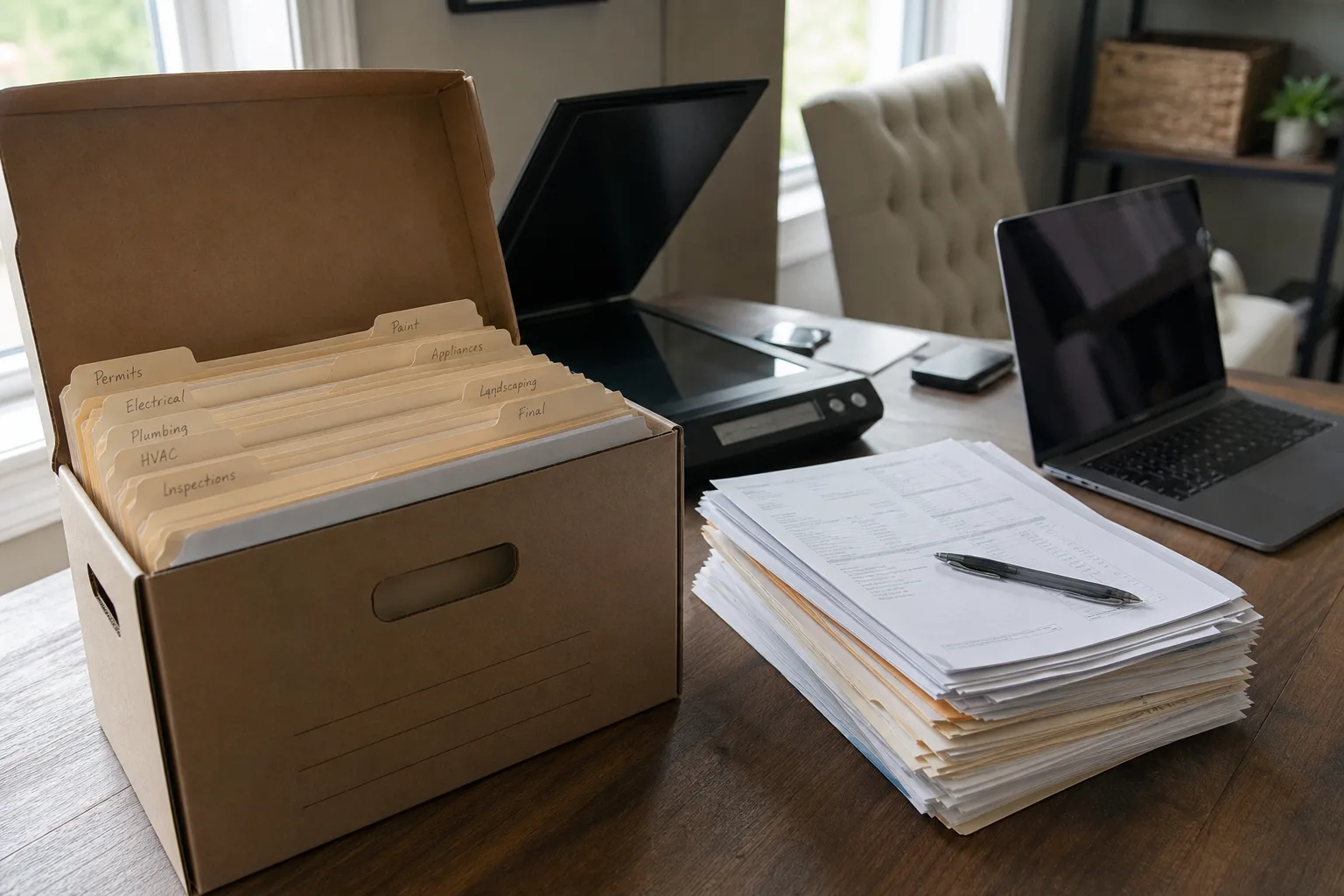
The cost of a missing document almost never shows up on the day you throw it out. It shows up four years later, at a closing table, in a claims adjuster's email, or in a letter from the county assessor giving you thirty days to respond. By then the paper is gone and the argument is over before it starts. That delay is what makes record-keeping so easy to get wrong: the penalty is separated from the decision by years, so nothing teaches you.
The usual advice is a list of holding periods. Seven years for this, three for that, forever for the other. It is not useless, but it is the wrong shape. Documents do not expire on a calendar. They expire when the thing they prove stops being contestable, and when that happens depends on what state you are in, what county, and sometimes what the deed to your particular subdivision says.
Tie every record to the event that kills it
Instead of asking how many years, ask what has to happen before nobody can ask about this again. That question produces a much shorter keep pile and a much more defensible one.
- A receipt for a new furnace stays alive until you sell the house. It supports the cost basis you report on the sale and it proves equipment age to an insurer if the unit fails or floods.
- A bank statement dies when the tax year it feeds is closed to examination and any loan it supported has been paid or refinanced.
- A closing disclosure from a purchase stays alive until you sell, and then until the return reporting that sale is closed. That is often a fifteen or twenty year life on a single sheet.
- A contractor's contract and lien waiver stay alive until your state's window for filing a mechanic's lien has passed, and then until the warranty period runs, and then until you sell.
- A cancelled homeowners policy stays useful long after cancellation, because some claims are made on the policy in force when the damage began, not when it was found.
Written that way, you stop making a general rule and start making a schedule with real endpoints. You also discover that the shredding you were about to do in January is premature for about a fifth of the pile.
The consequences people never trace back
Nobody says out loud that they lost money on a house because they threw out a folder. They say the sale was fine but the tax bill was bigger than expected. Same event, different story.
Cost basis is the clearest example. When you sell, the gain is the sale price minus what you paid plus what you put into the property in capital improvements. The kitchen, the roof, the addition, the new service panel, the retaining wall. Every one of those raises basis and lowers the taxable gain, and every one of them needs a receipt. The IRS is the authority responsible for how basis and improvements are documented, and the burden of substantiating an improvement sits with the taxpayer, not the contractor who did the work and closed his business in 2019. People who keep a single folder labeled improvements for the life of a house often walk into a sale with a meaningfully smaller bill than a neighbor who did identical work and kept nothing.
Second example: the age of a roof. A replacement cost policy pays differently once a component is past a certain age, and the way you prove the roof was replaced in a given year is the invoice, not your memory. Adjusters accept dated documentation quickly. They accept recollection slowly, if at all.
Third: a warranty claim on a water heater or appliance where the manufacturer wants proof of professional installation. The installer's invoice is the whole case. It costs nothing to keep and there is no way to recreate it.
Fourth, and the one that surprises people most: property tax appeals. If your assessment jumps, the strongest evidence is often a paper trail showing what the house actually cost you and what condition it was in. Homeowners who have the file on hand file the appeal. Homeowners who do not tend to skip it, and the higher assessment then compounds year over year.
Where the local rulebook moves the deadline
This is the part generic retention lists cannot cover, because the numbers genuinely differ by state and sometimes by county.
Statutes of limitations on contracts and construction defects. How long someone can sue you, or you can sue a builder, varies widely by state, and written contracts usually carry a longer window than oral ones. Some states also run a separate outer limit for construction defects measured from substantial completion. Your keep period for a remodel file should be the longer of those two clocks, not a round number.
Mechanic's lien windows. The period during which a subcontractor or supplier can record a lien against your property for nonpayment is set by state statute and is often measured in months from last furnishing of labor or material. Until it closes, your proof of payment and your lien waivers are the only thing standing between you and paying twice for the same drywall.
State tax examination periods. Federal and state clocks are not the same. Several states allow a longer look-back than the federal default, and a few keep the door open indefinitely if no return was filed. If you keep federal-length records in a state with a longer reach, you have a gap you will not notice until you get the notice.
Security deposits and landlord records. Deadlines to return a deposit with an itemized statement are set by state and, in some cities, by local ordinance, and penalties for missing them can exceed the deposit itself. Move-in and move-out photos and the itemized statement should outlive the tenancy by at least the local limitations period for a deposit claim.
Permits and certificates of occupancy. Local building departments vary enormously in what they retain and how fast they will produce it. In some jurisdictions a closed permit is a two-minute online lookup. In others it is a records request with a fee and a wait. Where retrieval is hard, your own copy is worth much more.
Vehicle and equipment records. Emissions testing, salvage title history, and lien releases follow state rules. A lien release you can produce in ten minutes turns a private sale into a same-day transaction.
The practical move is to look up three numbers for the state you live in and write them on the front of the file: the contract limitations period, the mechanic's lien window, and the state tax examination period. Everything else can be set against those.
How to actually run it
Scan everything and keep the paper only where an original signature or seal matters: deeds, titles, recorded documents, wills, and anything notarized. Two copies of the scans, in two places, one of them not in the house. A house fire that destroys your records also creates the claim in which you need them.
Name files so the endpoint is visible. 2021-06 roof-replacement Anderson keep-until-sale tells you in one glance what it is and when it dies. Then do one cull a year, and cull by endpoint rather than by date, moving anything that has passed its trigger into an archive folder you delete after a grace year.
Keep one short index: a page listing what exists and where. When someone else has to find your documents, whether that is a spouse, an executor, or you at eight in the morning before a closing, the index is the thing that makes the rest of it work.
The whole system costs an afternoon to set up and maybe twenty minutes a year to maintain. What it buys is the ability to answer a question with a document instead of a story, years after everyone else involved has forgotten the details.