Family Life — Field report TQL-FAM-246
Shopping for a Casket on a Deadline? What Drives the Price and What Your County Adds
Casket prices vary more by metal gauge, freight, and local cemetery rules than by anything in the catalog. Here is where the money actually goes, and which choices lock in.
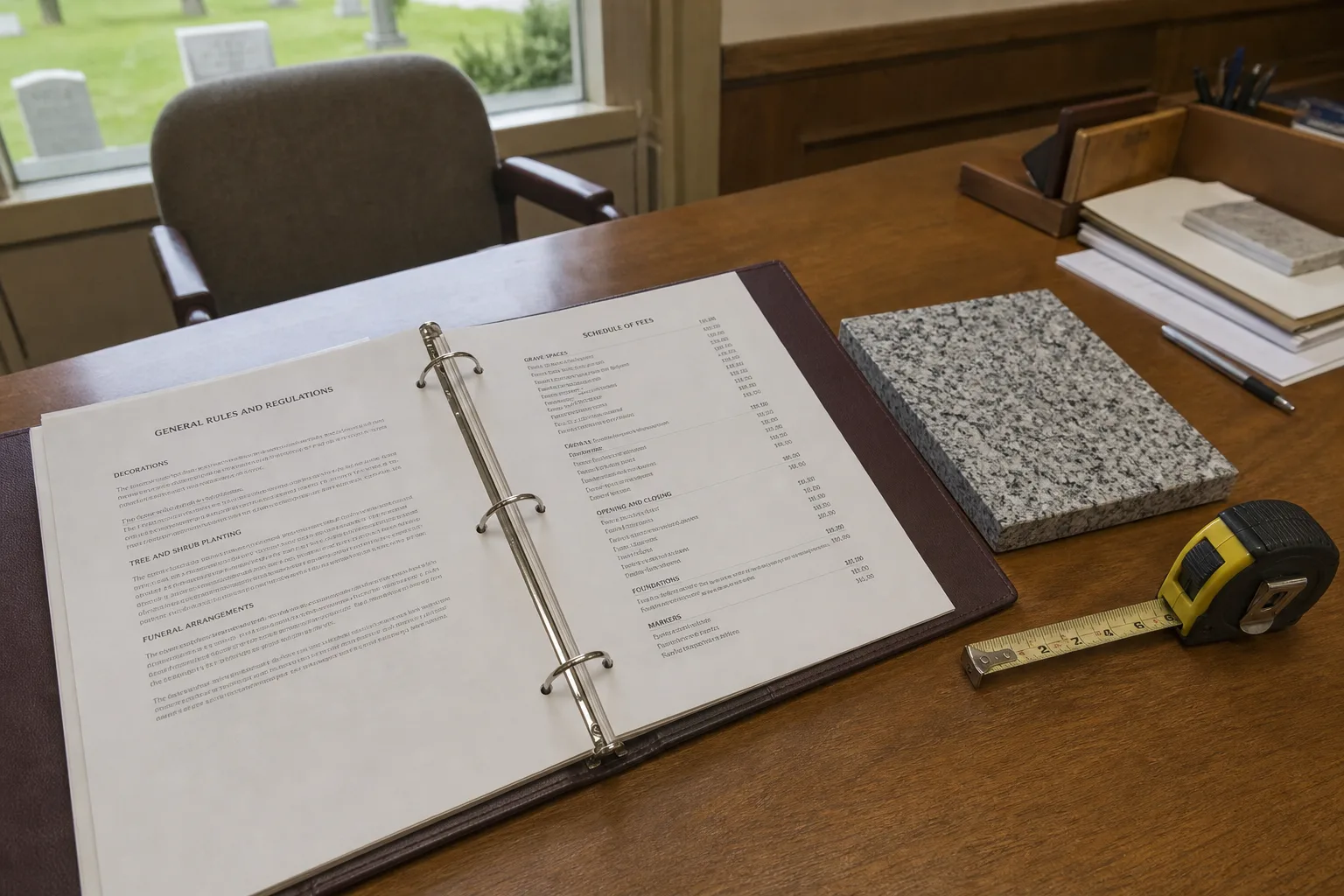
Most families buy a casket inside a seventy-two hour window, in a room where every option is arranged from least to most expensive, on a day when nobody wants to look cheap. That is the worst possible condition for a purchase that has three separate cost layers, only one of which is printed on the tag. The other two show up at the cemetery gate and again, quietly, two or three years later.
What you are actually paying for inside the box
A casket price is driven by four things, in roughly this order: material, construction, finish, and freight.
Material is the big lever. Steel is priced by gauge, and lower gauge means thicker metal. Twenty gauge is the common entry point, eighteen is a step up, and sixteen is heavier again. Stainless and copper and bronze sit above all of them, and bronze is priced by the pound in a way that tracks commodity metal markets more than it tracks the funeral industry. Hardwood is its own ladder: poplar and pine at the bottom, oak and cherry in the middle, mahogany and walnut at the top. A cloth-covered pressed wood casket is the floor of the market almost everywhere.
Construction is the second lever, and the one that generates the most confusion. A gasketed or "protective" casket has a rubber seal and a locking mechanism. It costs more. It does not preserve anything indefinitely, and no reputable seller will tell you it does, because federal rules prohibit claiming that a casket will prevent decomposition. What the gasket buys is a short-term barrier against groundwater, which matters more in a high water table than in dry ground. Ask yourself whether it matters in your cemetery before you pay for it.
Finish and interior are where the price ladder gets steep for reasons that have nothing to do with the ground. Crepe versus velvet, a swing bar versus a stationary handle, a brushed versus a polished coat. These are real cost differences in manufacturing, and they are also the easiest place for a selection room to move a family up two thousand dollars in ninety seconds.
Freight is the layer people forget. A casket weighs between about 150 and 400 pounds depending on material, and someone pays to move it. If you buy from a funeral home, that cost is already inside the number. If you buy elsewhere, you will see it as a shipping line, and it will vary a great deal by how far you are from a distribution point and whether the delivery address is a business with a dock.
The federal rule that makes outside purchases work
The Federal Trade Commission is responsible for the rule that governs how funeral goods and services are priced and disclosed to consumers. Two parts of it matter enormously when you are comparing options under time pressure.
First, a funeral provider has to give you an itemized price list, and has to give it to you in person before it starts discussing arrangements. You can ask for it, take it out of the building, and compare it against another provider without committing to anything. Second, a funeral home must accept a casket you obtained elsewhere, and it cannot charge you a handling fee for doing so, nor require you to be present for the delivery.
That second point is what created the outside market in the first place. By the time you are comparing a casket for sale from an independent retailer against a similar model in a selection room, you are comparing two numbers that include different things, and the difference is usually freight and margin rather than construction. Ask the retailer for the gauge or the wood species and the interior fabric, then ask the funeral home for the same two facts about its comparable unit. The comparison collapses into something manageable fast.
A practical note on timing: overnight and next-day delivery is normal in this market because the entire industry runs on short windows. Confirm the delivery date in writing and give the funeral home the tracking information the moment you have it.
Where your county and your cemetery change the arithmetic
The casket is a national market. Everything that happens after it arrives is intensely local, and this is where two families who bought identical caskets end up thousands of dollars apart.
- Outer burial containers. No state law requires a vault or grave liner, but most cemeteries do, as a condition of their own maintenance. The requirement is set in the cemetery's rules, not in statute, and the range runs from a basic concrete liner to a lined and sealed vault at several times the price. Ask which containers the cemetery accepts before you choose a casket, because the two have to fit together.
- Opening and closing. This is the cemetery's charge to dig, backfill, and restore the site. It varies by region as sharply as labor costs do, and it typically carries surcharges for weekends, holidays, and frozen ground. Northern cemeteries in winter are their own line item.
- Who may sell. A handful of states have specific licensing or registration rules governing casket retailing, and a few states regulate refrigeration or embalming timelines that indirectly shape what you buy and when. The state funeral board is the place to confirm this, and a single phone call settles it.
- Sales tax. Some states tax tangible funeral goods and exempt services. On a mid-range casket, that difference is real money, and it can flip the comparison between a local purchase and a shipped one.
The choices that lock, and the ones that stay open
Once the casket is lowered and the grave is closed, the casket decision is finished. So is the vault decision, the interment depth if you chose a double-depth plot, and any engraving or personalization ordered on the casket hardware. Personalized panels and custom embroidery are generally non-returnable the moment they go into production.
What stays open is more than families realize on the day. The permanent marker is a separate purchase with its own timeline, and there is no rule requiring you to buy it in the same week. The plot itself often allows a later change of marker style within whatever the cemetery permits. Perpetual care is usually a fixed percentage folded into the plot price rather than something you elect.
Deferring the marker for a few months is the single most useful thing a family under pressure can do. It moves a four-figure decision out of the seventy-two hour window and into a month where you can read the cemetery's specification sheet, price two or three monument dealers, and confirm the foundation charge, which the cemetery sets and the monument dealer bills through.
What the decision costs three years later
Run the numbers forward before you sign. A sealed vault and a heavier casket raise the day-one bill and change nothing about the annual cost of the site. The marker foundation is a one-time charge, but bronze markers on granite bases need occasional cleaning and, eventually, refinishing, while flush granite generally does not. Cemeteries with an endowment care fund charge you once and maintain the grounds forever; smaller church or municipal grounds sometimes bill families for grounds work later, or ask for it in donations. That distinction is written into the deed and the cemetery rules, and reading them the week before you buy the plot costs you nothing.
Ask for the itemized list, ask the cemetery what it requires in writing, and let the casket be a comparison of gauge, species, and freight rather than a comparison of how you feel standing in the room. Both markets, the national one and the local one, will give you straight answers if you ask them in that order.