House & Home — Field report TQL-HOM-584
Water Across the Floor at Ten at Night? What to Record Before Cleanup Begins
Everything you are supposed to do quickly to limit a water loss also erases the record of how bad it was. Ten minutes of documenting comes first.
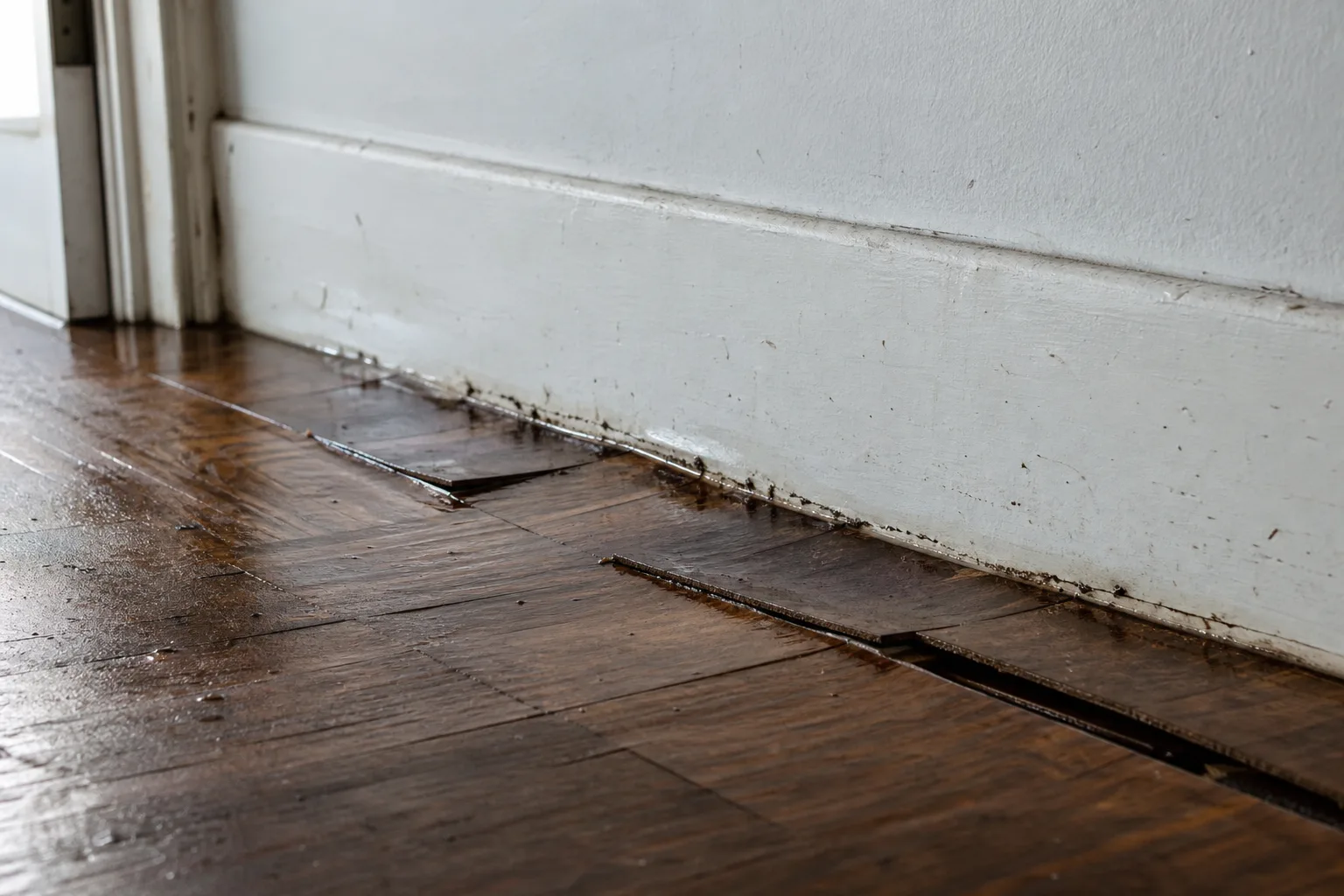
The water is off, the breaker for that side of the house is down, and nobody is standing in anything live. What happens in the next ten minutes shapes the rest of the claim, and the awkward part is that everything you are supposed to do quickly in order to limit the damage also erases the record of how bad it was. The wet vac, the fans, the carpet dragged out to the driveway: each of those is the correct move and each of them destroys evidence. Ten minutes of documenting first is the cheapest work you will do all month.
Wide Shots First, Then Close, Then Something With a Ruler in It
Photograph every affected room from the doorway before a single object moves, because a wide shot establishes the scale of the loss and the position of things in a way no close-up can reconstruct afterward, and the question of whether the rug was actually in that room does get asked. Then work inward: the source, the path the water took, the pooling, the wet baseboard, the underside of the sink cabinet, the ceiling in the room below. Shoot far more than seems necessary, since a photograph you did not take cannot be recovered later.
Then add scale to some of them, which is the step nearly everyone skips. Hold a tape measure against the water line on the drywall and photograph the tape rather than the wall. Lay a ruler in the standing water and shoot down at it. A photograph with no reference object in the frame is easy to argue about, since a wet wall in a picture could be six inches or two feet deep, and a photograph of a tape reading eleven inches up from the floor plate is very hard to argue with at all.
One Continuous Video, Narrated as You Walk
Then walk the whole affected area on video in one unbroken take, saying out loud what you are looking at and what time it is. Nobody will ever watch the entire thing, and that is not what it is for. A continuous walk catches the ceiling drip you had not noticed, the closet you forgot was on that wall, and the sequence of rooms in a way a folder of stills quietly loses. Say the date at the start, say where the water came from if you know, and say plainly that you do not know if you do not, because a guess spoken on video becomes a statement you have to live with for the rest of the claim.
The Facts That Will Not Survive the Night
Some things are true for a few hours and then become a matter of memory, so write them down while they are still checkable. The time you found it and the time the water stopped. Whether it was clean supply water, gray water out of an appliance, or sewage, because that category decides what has to be thrown away rather than dried. The outside temperature and whether it had been raining, if either could bear on the cause. Who else was in the house, and what they saw or heard before you got there.
What Not to Carry Out to the Curb
The instinct is to get soaked carpet and ruined boxes out of the house immediately, and where the water was clean and the health situation allows it, that instinct is worth resisting for a day. Move damaged things to the garage or a covered slab instead, photograph them where they land, and keep anything small and cheap to store: a square of carpet and its pad, a piece of the wet subfloor, the failed supply line itself.
Storage is a corner of a garage for a few weeks, and the alternative is a claim resting entirely on your description of objects nobody can look at. The failed part matters most of all. A braided hose that let go at the crimp is the only object able to answer whether a manufacturer or an installer contributed to the loss, and once it reaches the dumpster the answer is no, whatever actually happened. Bag it, date the bag, and put it where nobody helpful will tidy it away.
Two Lists, and the Calls That Follow Them
Start a contents list the same night, room by room and item by item, with a description, a rough age and what you paid if you remember. You will not finish it, and finishing is not the goal. Starting while the rooms are still recognizable is what makes the list accurate, since within three weeks the furniture will have moved twice. Start a spending list beside it, and route every receipt from that point into one envelope or one album on your phone: the wet vac rental, the box fans, the motel if the house is unlivable, the plumber's after hours call.
Most policies will cover reasonable costs incurred to protect the property from further damage, along with additional living expenses, but they cover them against records rather than against recollection, so an envelope of receipts is a claim and a memory of roughly what you spent is not. With the record made, the calls get easier, because you can answer questions instead of estimating. Water that arrived from outside the house rather than out of a pipe is a separate matter entirely, belonging to the national flood program administered through the Federal Emergency Management Agency, and knowing that before you describe the cause to anyone can save a week.
Ten minutes with a camera feels like exactly the wrong priority at the start of a bad night, standing in an inch of water with the fans still in the garage. It is also the part of the night that decides whether the claim becomes a negotiation about evidence or a straightforward accounting of a documented loss. The households that come out of a water loss well are almost never the ones who moved fastest. They are the ones who spent the first hour building a record, and then moved quickly with it already in hand.